
Author: Henry Chen Publish Time: 2026-10-13 Origin: Cassman
If you are planning a 10HL craft brewery, the choice between a 3-vessel and 4-vessel brewhouse can look straightforward: one has three process vessels; the other has four.
The real question is more useful:
Can the brewhouse produce your target number of batches per day, with a schedule your team can operate consistently?
A brewery planning two 10HL brews in a production day should not choose a configuration based on vessel count alone. It should compare the complete brewing sequence, where batches can overlap, how quickly the system cools wort, and whether the cellar can receive the beer produced.
This guide explains those trade-offs and shows what to request from a supplier before paying for the additional vessel.
A 10HL 3-vessel brewhouse with a separate mash tun, lauter tun, and combined kettle/whirlpool can be a practical choice for two brews per day. However, the supplier should demonstrate that the proposed equipment, utilities, automation and operating schedule can meet that target.
A 10HL 4-vessel brewhouse separates the kettle and whirlpool. That separation can reduce a process bottleneck and provide more scheduling flexibility, particularly if the brewery expects frequent multi-batch days. It does not, by itself, guarantee faster production: lautering, heating, wort cooling, cleaning and operator availability may still limit throughput.
For a fair comparison, ask suppliers to quote both configurations with identical specifications everywhere else and provide a time-based brew-day schedule for each.
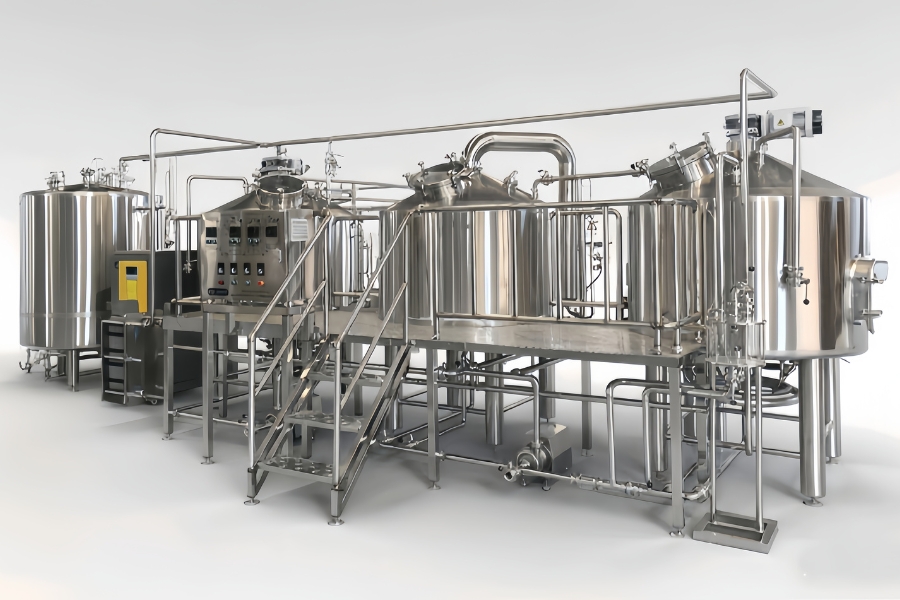
For this comparison, both options use the same mash tun and lauter tun. The difference is on the hot side after lautering.
Process stage | 10HL 3-vessel configuration | 10HL 4-vessel configuration |
Mashing | Separate mash tun | Separate mash tun |
Lautering | Separate lauter tun | Separate lauter tun |
Boiling | Combined kettle/whirlpool | Separate kettle |
Whirlpooling | Same combined kettle/whirlpool | Separate whirlpool |
Main difference | Boiling and whirlpooling occupy one vessel | Boiling and whirlpooling can occupy different vessels |
In a 3-vessel design, the combined kettle/whirlpool cannot start boiling the next batch while it is still holding the previous batch for whirlpooling and transfer.
In a 4-vessel design, the first batch can move from the kettle into the separate whirlpool. This may free the kettle earlier for the next batch.
That is the principal operational advantage worth pricing—not simply the presence of an additional stainless-steel vessel.
Potentially, yes. But “two brews per day” needs a precise definition.
Does the buyer mean:
Two mashes started in one day?
Two complete 10HL wort batches transferred to fermenters in one shift?
Two batches produced with one operator?
Two batches produced within an eight-hour working day?
Two batches produced regardless of recipe or original gravity?
These are different performance requirements.
A 3-vessel brewhouse may handle two 10HL batches in a day if its cycle times and supporting utilities are appropriately designed. The buyer should ask the supplier to show the complete sequence, including:
Mashing
Lautering and sparging
Kettle filling
Heating and boiling
Whirlpooling
Whirlpool rest
Wort transfer and cooling
Vessel turnover and cleaning
Start times for the second batch
The schedule should identify when each vessel becomes available, not merely state an estimated number of brews per day.
An equipment specification saying “two brews per day” is less useful than a simple production timeline showing both batches.
The timeline should state its assumptions—for example, beer style, mash duration, boil duration, wort cooling conditions, staffing and whether cleaning time is included. Without those assumptions, throughput claims are difficult to evaluate.
In the configuration discussed here, the combined kettle/whirlpool is the most obvious point to examine.
The first batch occupies that vessel during:
wort collection, depending on process design;
heating;
boiling;
whirlpooling;
whirlpool rest; and
transfer to the cooling system.
The next batch cannot use the combined vessel for boiling until the relevant stages of the first batch are complete and the vessel is ready.
That does not automatically make the 3-vessel design a poor choice. If the lauter cycle, operator workflow or fermentation schedule is already the limiting factor, a separate whirlpool may provide little practical benefit.
The decision depends on which step actually constrains your brew day.
A 4-vessel brewhouse gives boiling and whirlpooling separate vessels.
Once the first batch is transferred from the kettle to the whirlpool, the kettle may become available for the next batch sooner. This can create more overlap between batches.
However, the gain depends on the full system:
Can the lauter tun deliver the second batch when the kettle becomes available?
Does the hot liquor tank have enough usable hot water?
Can the steam system support the planned heating schedule?
Can the wort cooling system handle the transfer rate?
Is a fermenter available for each batch?
Does the automation support the proposed overlapping operations?
Can operators safely manage the simultaneous tasks?
A supplier should answer those questions before suggesting that four vessels will deliver a specific number of brews per day.
Buyer consideration | 3-vessel brewhouse | 4-vessel brewhouse |
Initial equipment investment | Generally lower | Generally higher |
Floor space | Generally less | Generally more |
Process piping and valves | Usually simpler | Usually more extensive |
Kettle/whirlpool overlap | Not possible in the combined vessel | Possible if the rest of the process supports it |
Two-brew production days | May be achievable with a verified schedule | May offer more scheduling flexibility |
Value for occasional two-brew days | Often worth evaluating first | Extra investment may be harder to justify |
Value for frequent multi-brew days | Depends heavily on demonstrated cycle times | More likely to be useful |
Installation and control complexity | Generally lower | Generally higher |
These are design tendencies, not guaranteed performance figures. Actual results depend on vessel dimensions, heating capacity, recipes, utilities, controls and operating procedures.
A 10HL 3-vessel system may be the better fit when:
two brews per day are needed occasionally rather than routinely;
the buyer has a defined capital budget;
floor space is limited;
the brewery values a relatively straightforward operating layout;
the proposed two-brew schedule has been demonstrated;
expected sales do not justify higher daily brewhouse throughput; or
cellar capacity, rather than hot-side capacity, is likely to be the near-term constraint.
For many growing craft breweries, money saved on an unnecessary process vessel may be more valuable if invested in fermenters, a bright beer tank, reliable cooling or packaging capacity.
The important condition is that the 3-vessel proposal must still meet the brewery’s actual production target.
The additional investment may be easier to justify when:
two or more brews are planned on most production days;
the brewery expects to increase brewing frequency;
the combined kettle/whirlpool is shown to limit the 3-vessel schedule;
multiple operators can use the available overlap effectively;
utilities and wort cooling are sized for the planned throughput;
the cellar can absorb the additional wort production; and
the brewery has enough space for the vessel and its associated pipework.
A 4-vessel brewhouse should be purchased for a measurable operational benefit, not because four vessels sound more advanced.

Brewhouse capacity is only one part of brewery capacity.
Consider a project with:
6 × 10HL unitank fermenters
2 × 10HL bright beer tanks
a target of two 10HL brews per production day
That brewhouse could produce wort faster than the available fermenters can accept it if tanks are occupied for extended fermentation or conditioning periods. The number of brew days possible each week will depend on beer styles, fermentation time, tank turnover and packaging schedules.
Before paying for more hot-side throughput, calculate:
How long does each beer occupy a fermenter?
Will different recipes require different fermentation or conditioning times?
How many tanks will be unavailable during cleaning or maintenance?
When will bright beer tanks be available?
What is the realistic packaging or serving schedule?
CASSMAN discusses this planning problem in its existing article, How Many Fermenters Does a Brewery Need? A Practical Tank Planning Guide.
The most productive brewhouse is not necessarily the one that can brew the fastest. It is the one that works with the entire brewery’s production flow.
A buyer may specify a 30HL hot liquor tank (HLT) and a 20HL cold liquor tank (CLT) for a 10HL brewhouse. Those figures are useful starting requirements, but nominal tank volume alone does not prove that the system can complete two brews efficiently.
The supplier should check:
total mash and sparge water demand;
expected brewing losses;
cleaning-water demand during the brew day;
HLT reheating rate between uses;
available water supply temperature and flow;
CLT recharge time;
desired wort outlet temperature; and
whether simultaneous operations create peak utility loads.
Ask for a water and energy balance for the proposed two-brew schedule. It should show when hot and cold water is used and how the system recovers before the next demand peak.
For a broader facility-planning overview, see CASSMAN’s guide to brewery utility requirements.
Wort cooling is a particularly important point in a two-brew-per-day design.
For perspective, cooling approximately 1,000 litres of wort through a large temperature difference requires a substantial amount of heat removal. A chiller’s published capacity at a stated glycol temperature does not mean it can necessarily cool a full 10HL batch at the desired transfer rate on its own.
The actual cooling arrangement may involve:
incoming water;
a cold liquor tank;
glycol;
a single- or multi-stage plate heat exchanger; and
stored cooling capacity between brews.
If the cooling proposal includes, for example, chillers rated at a combined output under specified conditions, ask the supplier to distinguish between:
Instantaneous wort-cooling duty
Chiller capacity at the stated operating temperature
Stored cooling capacity in the cold liquor system
Fermenter and bright beer tank cooling loads
Recovery time before the second brew
These are related but different design requirements. A credible quotation should show how they work together.
A separate whirlpool creates an opportunity for more process overlap, but using that overlap effectively requires clear controls and operating logic.
For an automated 10HL system, buyers should ask how the PLC and HMI manage:
multi-step mashing;
vessel temperatures;
pump operation;
water dosing;
valve positions;
wort transfer;
process interlocks;
alarms; and
recipe and batch records.
A quotation listing a Siemens PLC or another recognized brand does not, by itself, define what the system will automate.
Ask the supplier to identify which actions are automatic, which require operator confirmation, and which remain fully manual. A preliminary P&ID and control-function list are far more informative than a component-brand list alone.
If you want to know the real cost of adding an independent whirlpool, ask for two quotations with the same project scope.
Keep the following identical in both proposals:
10HL batch size;
target daily brewing output;
mash tun and lauter tun specifications;
HLT and CLT specifications;
vessel material and finish;
heating method;
pumps and instruments;
wort cooling;
platform;
valve quality;
PLC and HMI scope;
installation scope;
documentation; and
FAT requirements.
The supplier should then identify the differences created by the fourth vessel, including any changes to:
vessel cost;
platform size;
footprint;
process piping;
valves;
controls;
steam demand or piping;
installation work; and
estimated production schedule.
Ask for both the price difference and the operating difference. One without the other does not support a sound purchasing decision.
Before choosing a configuration, send your supplier these questions:
Can you provide a time-based schedule for two complete 10HL brews in one production day?
What brew-day length and staffing level does that schedule assume?
Which activities can overlap in each configuration?
Which vessel limits the schedule in the 3-vessel option?
How much earlier does the kettle become available in the 4-vessel option?
Does the HLT provide sufficient usable hot water for both brews?
How quickly can the CLT and cooling system recover?
What is the expected wort transfer and cooling time under the stated site conditions?
Are cleaning and vessel turnaround included in the schedule?
Can you provide a preliminary P&ID showing manual and automatic operations?
What additional floor space and ceiling clearance does the 4-vessel option require?
What is the complete, itemized price difference between the two options?
If the supplier cannot explain the expected operating sequence, it is too early to rely on a throughput claim.
CASSMAN works with brewery customers on equipment selection, layout design, process drawings and project planning. For a 10HL brewery considering two brews per day, the useful starting point is the production requirement, followed by the equipment configuration—not the other way around.
A project discussion should establish:
target annual production;
expected brewing days per week;
planned beer styles;
fermentation and packaging schedule;
available utilities;
building dimensions;
staffing;
desired automation level; and
future expansion plans.
Those details allow the 3-vessel and 4-vessel options to be compared against the same operating target.
You can see examples of CASSMAN brewery projects on our Case Studies page, or explore more brewery planning topics in the CASSMAN Blog.
For a 10HL brewery aiming to brew twice per day, start by requesting a properly scheduled 3-vessel proposal and an otherwise identical 4-vessel alternative.
Choose the 3-vessel option if it meets your required brew-day schedule with acceptable staffing, utilities and room for growth.
Consider the 4-vessel option if the separate whirlpool produces a meaningful scheduling advantage that your brewery will use often enough to justify its additional cost.
The right decision is not “three vessels versus four vessels.” It is verified production performance versus total project investment.
It may be able to produce two 10HL batches in one day, but that depends on the full brewing schedule, heating capacity, wort cooling, cleaning time, utilities and staffing. Ask the supplier for a time-based plan showing when both batches are transferred to fermenters.
No. A separate whirlpool can free the kettle sooner, but overall throughput may still be limited by lautering, heating, cooling, operator availability or fermenter capacity. Its benefit should be demonstrated for your intended recipes and production schedule.
In the configurations compared here, the key difference is whether boiling and whirlpooling take place in one combined vessel or two separate vessels. Separating them may allow more overlap between successive batches.
It may be appropriate, but the answer depends on usable tank volume, water consumption, temperature, reheating rate and when each brew requires hot water. Request a water and energy balance rather than relying only on nominal tank capacity.
Not necessarily. If fermenters are occupied when the next batches are ready, cellar capacity—not brewhouse throughput—becomes the constraint. Evaluate fermenter turnover and packaging schedules before investing in additional hot-side capacity.
Yes, if brand standardization matters to your project. However, also specify the required functions and request a control narrative or function list. A PLC brand does not tell you which process steps are automated.
You can ask CASSMAN to prepare a 3-vessel configuration and a separately priced 4-vessel alternative using the same stated scope. Provide your target daily output, site utilities, building dimensions, cellar plan and automation requirements so the proposals can be compared on a consistent basis.
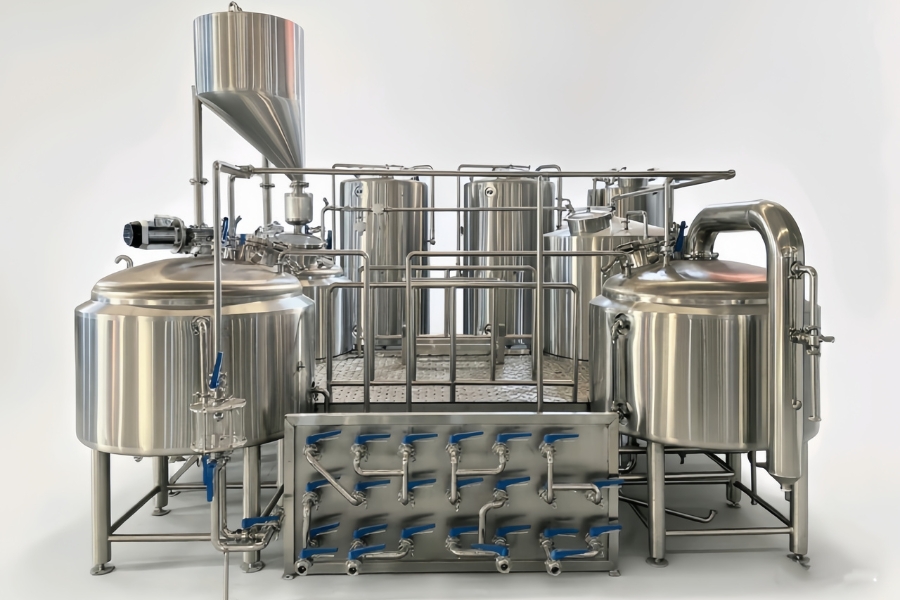
Planning a new brewery or upgrading an existing brewhouse? Send CASSMAN:
Your target number of brews per day
Expected brewing days per week
Available floor space and ceiling height
Heating preference
HLT and CLT requirements
Fermenter and bright beer tank plan
Available water, power and cooling utilities
Automation requirements
Destination country
Contact CASSMAN to request a project-specific 3-vessel and 4-vessel brewhouse comparison, including the proposed equipment scope and operating assumptions.


