Home » News » Unitank vs. Brite Tank: How to Plan Fermentation and Packaging Capacity
Unitank vs. Brite Tank: How to Plan Fermentation and Packaging Capacity
Author: Site Editor Publish Time: 2026-11-19 Origin: Site
Choose a unitank workflow when fermentation, carbonation, and serving or short packaging runs can share the same vessel; shortlist a separate fermenter-plus-brite-tank workflow when packaging preparation, carbonation, clarification, and tank turnover need their own scheduling space.
Unitank vs. brite tank: the short operational difference
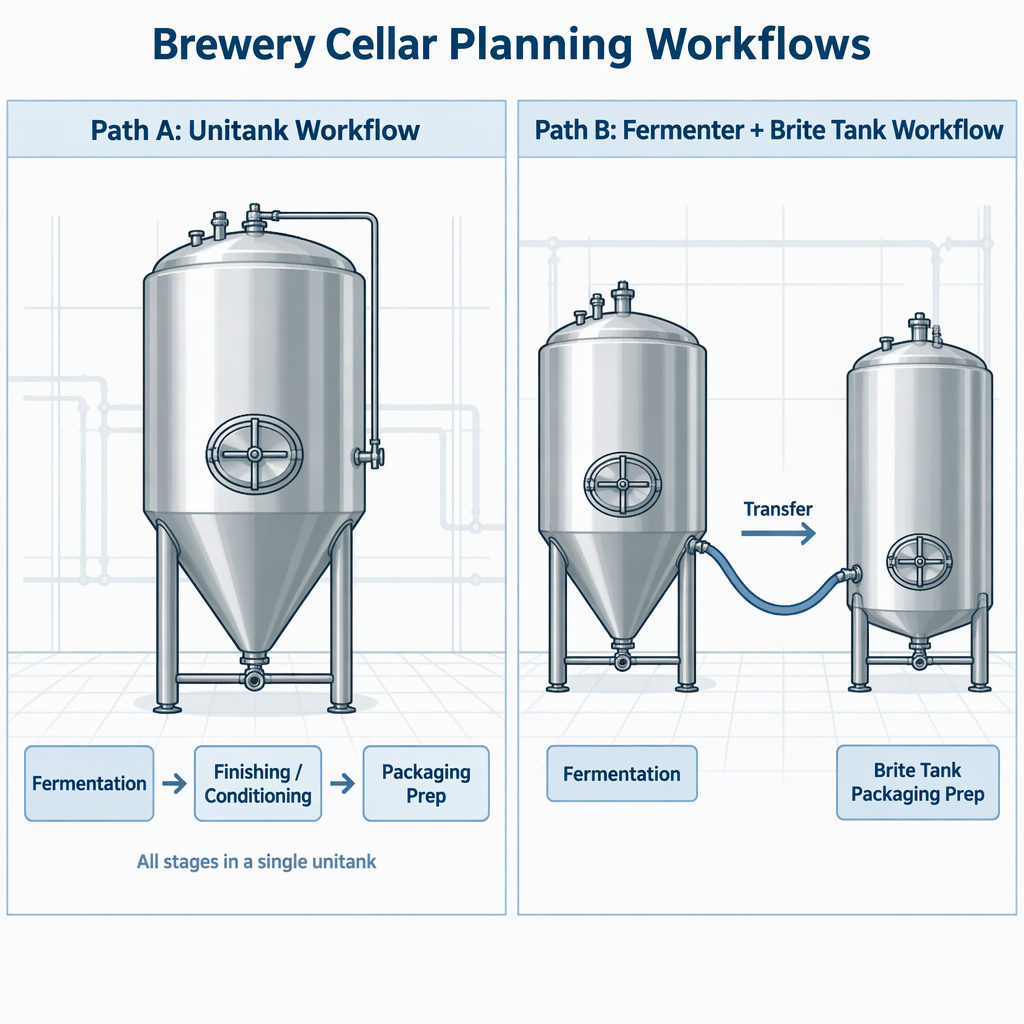
A unitank combines fermentation with downstream uses such as carbonation or serving, while a brite tank is used after fermentation for conditioning, carbonation, clarification, serving, or packaging preparation.
Unitank workflow
In a unitank workflow, one vessel can carry the batch through fermentation and into later beer-handling steps, so the planning question is how long that vessel remains occupied before it is ready for the next brew.
This can simplify a compact cellar, but the same vessel may be tied up by finishing, carbonation, or serving tasks that occur after primary fermentation.
Fermenter plus brite tank workflow
In a separate workflow, the fermenter is released when beer moves to a brite tank for carbonation, clarification, pressure control, sampling, serving, or packaging preparation.
The added vessel gives packaging and finishing a dedicated place in the schedule, but it also adds cleaning, transfer, utility, and layout requirements.
Where each workflow fits best
There is no universal winner: the better shortlist depends on whether the brewery is more constrained by cellar space, fermentation days, packaging windows, or the need to separate finishing from fermentation.
Decision factor
Unitank emphasis
Separate brite-tank emphasis
Space and vessel count
Useful when a compact workflow is preferred and the same vessel can remain occupied through finishing steps.
Useful when the brewery can allocate floor space for a dedicated packaging-preparation vessel.
Batch scheduling
Works when the next batch can wait until the unitank is empty, cleaned, and ready.
Helps when a fermenter should be freed while beer continues conditioning or carbonation in another tank.
Packaging rhythm
Fits occasional or smaller packaging runs when finishing time does not block the brewing plan.
Fits recurring packaging windows where preparation, carbonation, and serving pressure need planned availability.
Process separation
Keeps fewer transfer points, but combines several tasks in the same scheduling slot.
Separates fermentation from finishing and packaging preparation, which can make bottlenecks easier to see.
How to plan fermentation capacity before choosing tanks
Plan fermentation capacity from batch size, working volume, fermentation days, and total tank capacity before deciding whether a unitank or a separate brite tank will reduce the real bottleneck.
Define the batch size and target working volume. Use the volume that will actually occupy the vessel, not just the nominal tank label.
Map how many days each beer occupies fermentation capacity. Include the time the vessel cannot accept another batch because it is still fermenting, finishing, cooling, transferring, or waiting for cleaning.
Compare required batches per week with available vessel-days. If fermentation days dominate the schedule, more fermentation capacity may matter more than adding a brite tank.
Identify post-fermentation hold time. If carbonation, clarification, serving, or packaging preparation keeps a vessel occupied, a brite tank may release the fermenter sooner.
Check the result against the brew schedule. A tank plan should match the actual mix of beer styles, batch intervals, packaging dates, and cleaning windows.
Do not buy from a tank-count rule of thumb alone. Ask suppliers to size against your batch calendar, desired working volume, beer residence time, and packaging plan rather than against an unsupported throughput promise.
How to plan packaging capacity and tank turnover
A brite tank helps packaging flow when the packaging side needs a prepared beer volume available while fermentation vessels continue turning over for new batches.
Packaging condition
Capacity implication
Likely shortlist
Beer needs a dedicated stage for carbonation, clarification, pressure control, or packaging preparation.
A finishing vessel can protect the fermenter schedule from packaging delays.
Separate brite tank
The same vessel can remain occupied through fermentation and later handling without delaying the next brew.
Combining stages may be acceptable when turnover pressure is low.
Unitank
Draught or serving quality depends on sanitation, line cleaning, system design, gas dispense, and balance.
Packaging and serving plans should include dispense-side controls, not only tank count.
Either, with dispense planning
Cost components to compare without guessing prices
Compare total project cost by vessel function, installation scope, utilities, cleaning, controls, floor space, and scheduling impact; do not rely on an isolated tank price.
Cost category
Unitank workflow
Fermenter plus brite tank workflow
Vessels and fittings
One vessel may cover fermentation and later handling tasks.
The brite tank adds a dedicated vessel for carbonation, clarification, serving, or packaging preparation.
Controls and pressure management
Confirm the required process functions for the combined vessel.
Confirm the brite tank functions needed for pressure control, sampling, cooling, and packaging preparation.
Transfers and cleaning
Fewer vessels can reduce transfer planning, but the combined vessel still needs cleaning time before reuse.
More vessels can add transfer and cleaning steps while improving scheduling separation.
Building and utilities
Verify drainage, power, glycol or cooling connections, access, ceiling height, and service clearances before comparing quotes.
Verify the same items plus the space and utility demand for the added finishing vessel.
Request quotations with the same batch size, working volume, required process steps, and accessories.
Separate vessel cost from freight, installation, controls, cleaning hardware, utility connections, and commissioning support.
Ask suppliers to identify exclusions rather than comparing a complete scope with a partial scope.
Keep winter or ambient-temperature assumptions as a site utility question unless the supplier provides project-specific heating or insulation data.
Utilities, cleaning, safety, and layout checks
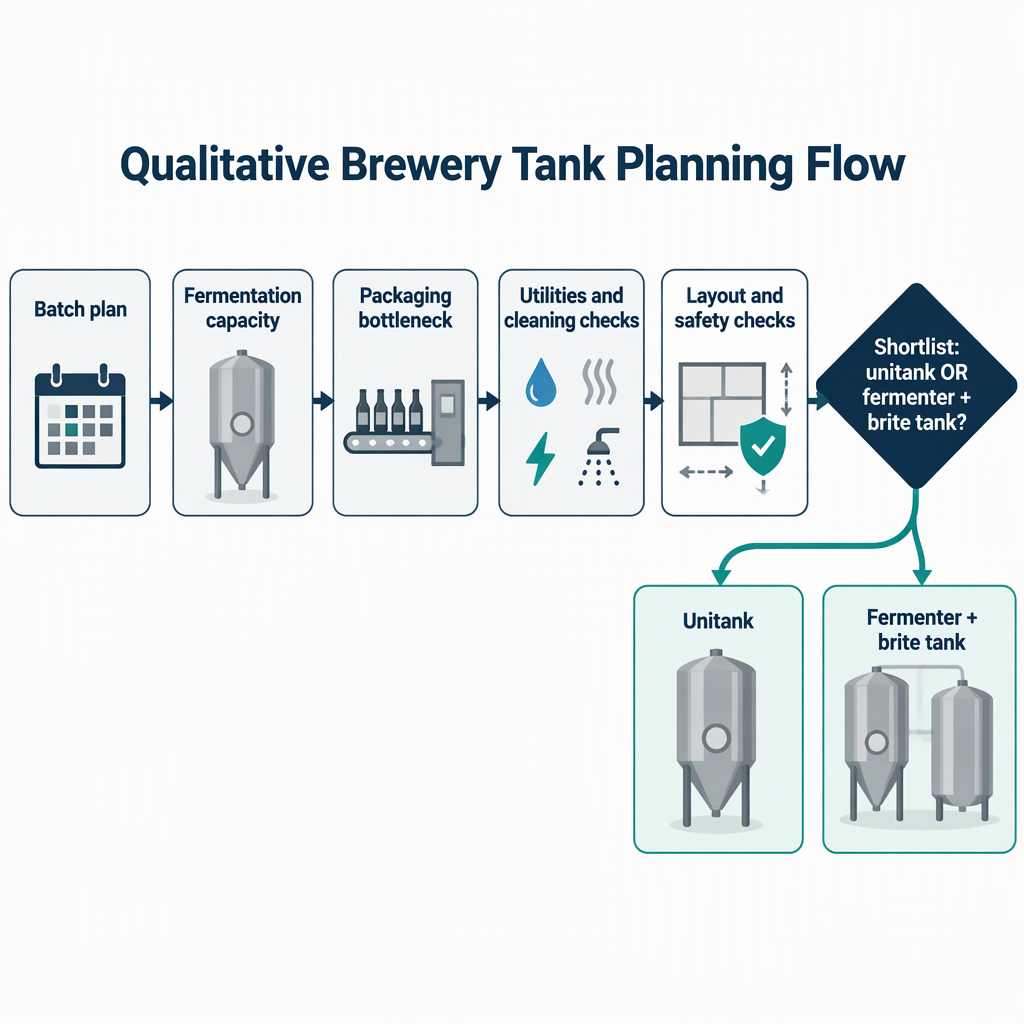
Before committing to either workflow, measure utility capacity, cleaning access, transfer routes, working clearances, drainage, and tank-entry safety requirements at the actual site.
Measure available floor area, ceiling height, door access, rigging path, maintenance clearance, and operator walkways.
Confirm whether the brite tank plan requires cooling jackets, sanitary sampling, pressure control, or packaging connections.
Include draught or serving-side sanitation, gas balance, and line-cleaning requirements when beer will be served or transferred to draught systems.
Check glycol or cooling capacity, power availability, compressed air, water supply, wastewater handling, and drainage slope with the site engineer.
Plan cleaning time into the vessel schedule so the capacity model does not assume instant reuse.
For any powered pump, valve actuator, conveyor, or packaging equipment that must be manually accessed for cleaning or clearing, switch it off and disconnect the applicable power source before access, then follow the model manual’s permitted access procedure.
Tank cleaning and entry planning should include confined-space hazard assessment, engineering controls, safe work practices, training, and equipment; brewery safety guidance also notes that such best-practice material is not itself a regulation.
Decision table: which option should you shortlist?
Shortlist the workflow that removes your limiting constraint: vessel occupancy for compact operations, or packaging and finishing bottlenecks for breweries that need faster fermenter turnover.
If your main constraint is...
Shortlist first
Why
Limited cellar footprint and modest packaging pressure
Unitank workflow
The same vessel can support fermentation and later handling when schedule pressure allows.
Frequent packaging dates or beer waiting after fermentation
Fermenter plus brite tank
A brite tank gives carbonation, clarification, serving, or packaging preparation a dedicated place.
Unclear bottleneck between brewing, fermentation, and packaging
Model both workflows
Use the same batch calendar, cleaning windows, and utility assumptions before requesting quotes.
Taproom service with draught focus
Either workflow with draught-quality planning
Serving quality also depends on sanitation, dispense balance, and draught-system design.
Final purchasing checklist for engineering procurement
Before requesting a final quote, procurement should turn the process comparison into a measured specification package for batch size, residence time, packaging rhythm, utility limits, cleaning method, and layout.
State batch size, working volume, fermentation days, and expected tank occupancy for each core beer.
State whether carbonation, clarification, serving, pressure control, sampling, or packaging preparation should occur in a brite tank.
Provide the same site utility information to every supplier, including cooling, power, water, drainage, wastewater, compressed air, and ambient-temperature assumptions.
Provide the floor plan, access route, ceiling height, door dimensions, and required service clearances.
Define cleaning, confined-space, and manual-access safety responsibilities before installation and operation.
Request separate line items for vessels, accessories, controls, utility interfaces, freight, installation support, and exclusions.
Use unitanks when combined vessel use matches the batch calendar.
Use brite tanks when finishing and packaging are blocking fermenter turnover.
Compare workflows under the same batch, utility, cleaning, and layout assumptions.
Conclusion
A unitank vs brite beer tank decision is a capacity-planning decision, not a generic equipment ranking.
If the brewery’s constraint is compact operation and the vessel can stay occupied through finishing without delaying the next batch, a unitank workflow may be the cleaner shortlist. If packaging preparation, carbonation, clarification, or serving readiness is holding beer after fermentation, a separate brite tank may protect fermenter turnover. In both cases, verify the numbers with measured batch schedules, site utilities, cleaning time, safety requirements, and a comparable supplier scope.
FAQ
These questions help buyers test whether the limiting factor is fermentation capacity, packaging capacity, utilities, cleaning, or layout.
Is a unitank the same as a brite tank?
No. A unitank can combine fermentation with downstream use such as carbonation or serving, while a brite tank is normally planned as a post-fermentation vessel for carbonation, conditioning, clarification, serving, or packaging preparation.
When does a brite tank improve capacity?
A brite tank improves the schedule when beer can leave the fermenter and continue carbonation, clarification, pressure control, or packaging preparation without keeping the fermenter occupied.
Is a unitank better for a small brewery?
It can be a strong shortlist when cellar space is tight and the same vessel can remain occupied through fermentation and finishing without delaying the next brew.
Which option costs less?
The lower total project cost depends on the complete scope: vessels, fittings, controls, utilities, cleaning, installation, floor space, and scheduling impact. Compare supplier quotes only when each quote uses the same process assumptions.
How should winter temperature be handled in the comparison?
Treat winter operation as a site utility and ambient-temperature check. Ask suppliers to size any cooling, heating, insulation, or control requirements against your building conditions instead of assuming one generic winter answer.
What safety issue is easy to overlook?
Confined-space and manual-access planning is easy to overlook; breweries should assess hazards, define safe work practices, train personnel, and use suitable equipment before cleaning or entry tasks.
What information should be ready before requesting a quote?
Prepare batch size, working volume, fermentation days, desired packaging rhythm, utility information, layout measurements, cleaning expectations, and the process steps that must occur in each vessel.
Ready to Build Your Brewery with a Trusted Partner?
Don't navigate the world of brewery manufacturing alone. Let my team of experienced engineers provide you with a no-obligation quote and a preliminary design for your project.