Why X-ray instead of optical or high-frequency sensing
Optical and many high-frequency level checkers only work reliably on transparent containers. The moment you run aluminum cans, dark PET, printed sleeves, or labeled glass, those methods struggle.
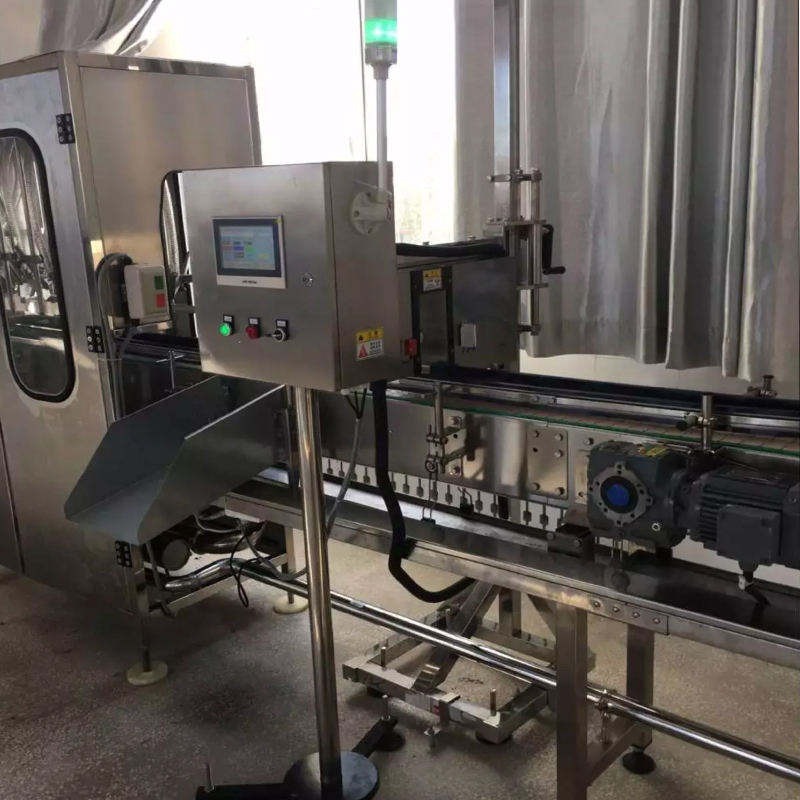
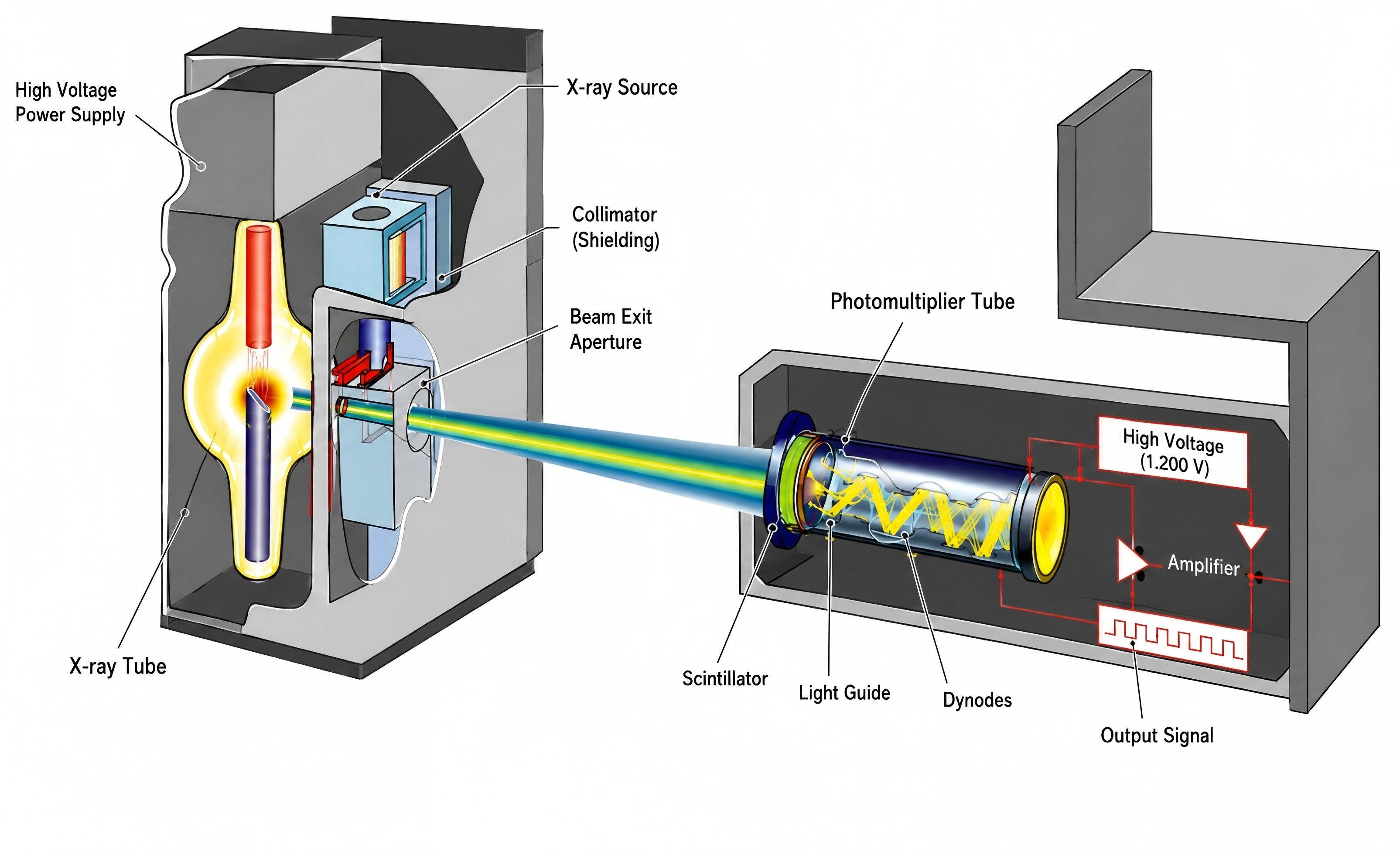
X-ray inspection reads the actual liquid column regardless of how opaque the packaging is. Products pass through a low-energy X-ray scanning tunnel; containers with different fill levels block the beam by different amounts, producing distinct readings at the receiver. The system compares each reading against your defined parameters and rejects anything out of spec.
This makes one machine viable across mixed packaging — cans today, PET tomorrow — instead of buying a separate technology for each container type. Independent manufacturers in the category confirm X-ray's core advantage is penetrating opaque and metal packaging where optical sensors cannot, as Daheng Imavision and Mic Machinery both note for canned and dark-container lines.
Important and honest caveat: foam and sloshing can affect reading accuracy on highly carbonated or fast-moving products. We size and position the unit for your specific product and line speed to keep this within the rated tolerance.
Who uses this machine
This inspector is built for fillers who cannot afford an out-of-spec container reaching a retail shelf:
Beverage — water, soft drinks, beer, carbonated drinks, juice, tea, cold coffee
Dairy and plant-based — milk and similar liquid products
Food — sauces, oils, condiments and other liquid foods
Pharmaceutical and chemical — liquid medicines, solutions, cleaning agents
It handles containers from 60 ml to 1,000 ml (larger sizes available on request) across aluminum cans, tinplate cans, PET bottles, PE bottles, and glass bottles.
How the inspection and rejection works
Scan — each filled container passes through the X-ray tunnel on a single-lane conveyor.
Evaluate — the system measures the fill level and compares it to your low-level threshold.
Track — an encoder mounted on the conveyor's synchronous motor assigns each defective container a specific ID, so rejection stays accurate even if the line stops or changes speed.
Reject — non-conforming containers are ejected through a ≤15 cm gap in the guardrail, with simultaneous audible and visual alarms.
Collect — rejected items drop into a rigid catch bin you position at the ejection point.
Because rejection is tied to a tracked container ID rather than a timer, line-speed fluctuations and stoppages do not cause mis-rejects.
Key features
Non-contact, in-line, non-destructive — no damage to product or packaging.
Encoder-based reject tracking — accuracy holds through line stops and speed changes.
Auto-adapts to line speed — dynamic, real-time inspection without manual retuning.
Separate inspection and control cabinets — prevents electromagnetic interference for more stable operation.
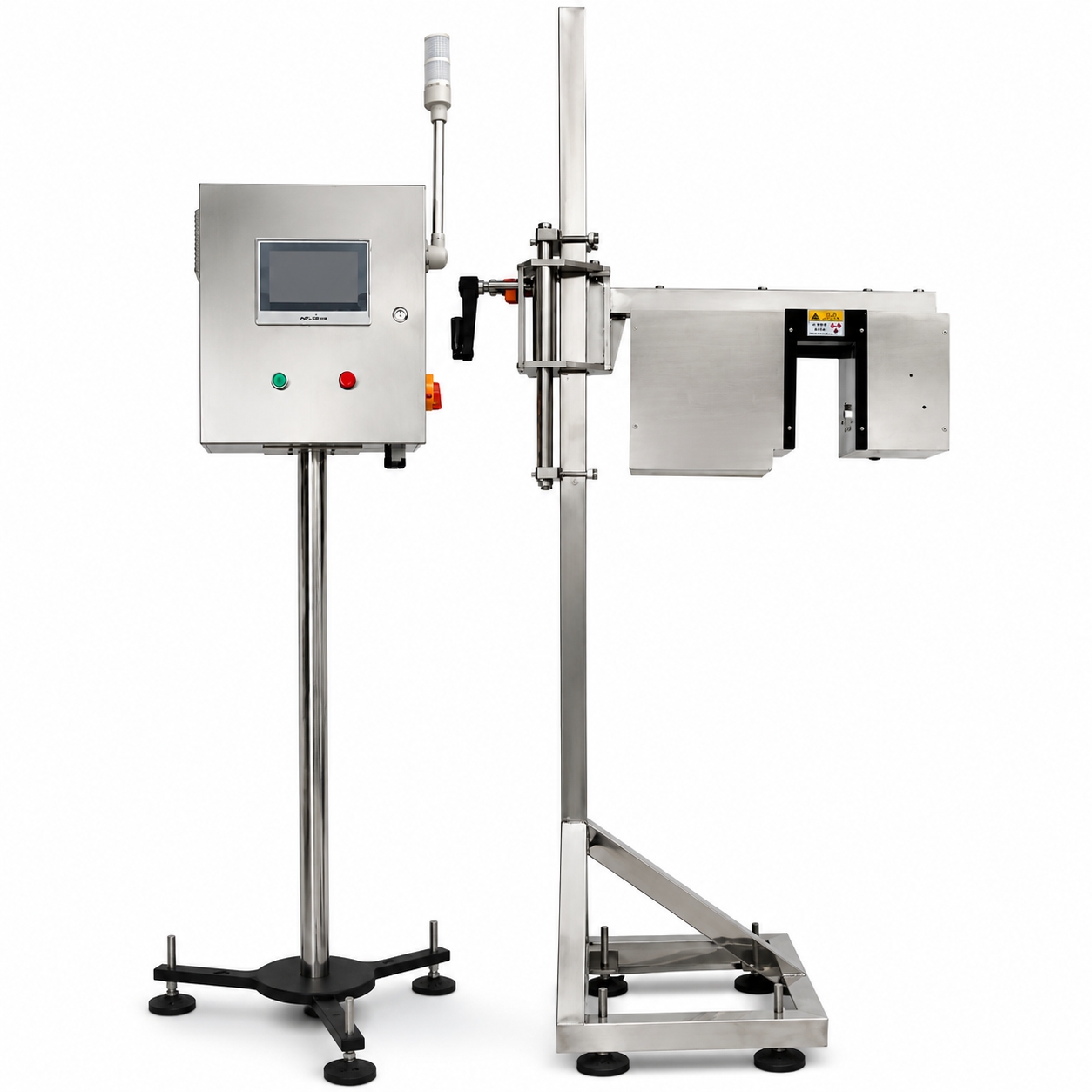
Stainless steel, sealed main unit — resistant to fog and water droplets for washdown-type environments.
X-ray cuts off when idle — no container, no emission; this also extends X-ray source life.
Hardware circuitry + embedded OS — built for long-term, stable continuous running.
7-inch touchscreen HMI — simple operation and fast switching between container types.
No radioactive isotope source — uses a soft-ray (X-ray tube) design; radiation protection is safe and reliable.
Technical specifications
As published in the Cassman engineering proposal (June 2026). Final configuration is tailored to your container and line.
Parameter | Specification |
Maximum throughput | 36,000 bottles/hour |
Conveyor line speed | ≤ 1.6 m/s |
Container materials | Aluminum can, tinplate can, PET, PE, glass |
Container capacity | 60 ml – 1,000 ml (larger customizable) |
Container diameter | 20 mm – 100 mm (component selection varies by material density and diameter) |
Static resolution | ±1 mm (foam/sloshing may affect accuracy) |
Dynamic resolution | ±1.5 mm (foam/sloshing may affect accuracy) |
Reject rate (non-conforming) | ≥ 99.9% |
Detection scope | Low liquid level |
Power supply | 220 V, 50 Hz, single-phase (special voltages on request) |
Total power | Approx. 1.0 kW |
Control voltage | 24 V DC |
Compressed air | 4 bar (min.) – 12 bar (max.), customer-supplied air line |
Operating temperature | 0°C – 40°C |
Operating humidity | ≤ 95% RH (at 40°C) |
HMI | 7-inch touchscreen, LED-backlit LCD |
Housing | Stainless steel, sealed main unit |
Installation and integration
Where it goes: after the filling machine, and either before or after the coder.
Line requirement: mounts on a single-lane conveyor with a straight section of at least 2 meters.
Conveyor modification: cut a guardrail gap of ≤15 cm at the straight section to act as the reject exit.
Composition: detection unit, rejection unit, power distribution cabinet, HMI, electronic and mechanical components.
Installation time: completed within 24 hours on site.
Send us your conveyor height, line speed, and container drawings and we will confirm fit before production.
Core components and quality
Key components are imported for performance and reliability:
X-ray emitter — Japan
X-ray receiver — Japan
HMI — Taiwan
On inspection results, the system is built to perform comparably to leading international brands such as Heuft (Germany) and Krones (Germany), at a price point suited to growing fillers.
Certifications: CE, SGS, ISO 9001 quality management, TÜV, and CSA, plus an Alibaba Verified Supplier credential. Manufactured by Jinan Cassman Machinery Co., Ltd. — 15 years of experience, a 15,000 m² factory, and an installed base across 65 countries.
Frequently asked questions
Is X-ray fill level inspection safe? Does it make the product radioactive?
Yes, it is safe. The machine uses a low-energy X-ray tube — not a radioactive isotope source — and emission stops automatically when no container is present. There is no residual radioactivity in the product, consistent with how non-isotope X-ray fill inspectors are described across the industry, including Thermo Scientific InScan.
Can it inspect aluminum cans and opaque bottles?
Yes. That is the main reason to choose X-ray over optical sensing — it reads the liquid level through metal cans, dark PET, labels, and printed sleeves that block optical and many high-frequency sensors.
What is the highest speed it can run?
Up to 36,000 bottles per hour, at a conveyor line speed of ≤1.6 m/s. The exact rate depends on container size and diameter.
How accurate is it?
±1 mm static and ±1.5 mm dynamic resolution, with a ≥99.9% reject rate for non-conforming containers. Foam and sloshing can affect accuracy, so we tune the configuration to your product.
What does it detect?
Low liquid level (underfill). Out-of-spec containers are rejected automatically with audible and visual alarms.
How long does installation take?
On-site installation is completed within 24 hours, provided the line meets the single-lane, 2-meter straight-section requirement.
Get a tailored configuration
Tell us your container type, capacity, line speed, and conveyor layout, and we will recommend the right configuration and confirm the fit.
Request a quote →


