For winery owners and production managers, selecting the right wine tank is one of the most critical infrastructure decisions you will make. It is not just about holding liquid; it is about controlling the environment in which your vintage develops.
Whether you are equipping a startup studio or expanding a commercial facility, the "best" tank is one that balances capacity, sanitary design, and thermal control.
In this guide, we break down the key factors to consider when buying a wine tank, helping you navigate the technical specifications to find the perfect vessel for your winemaking style.
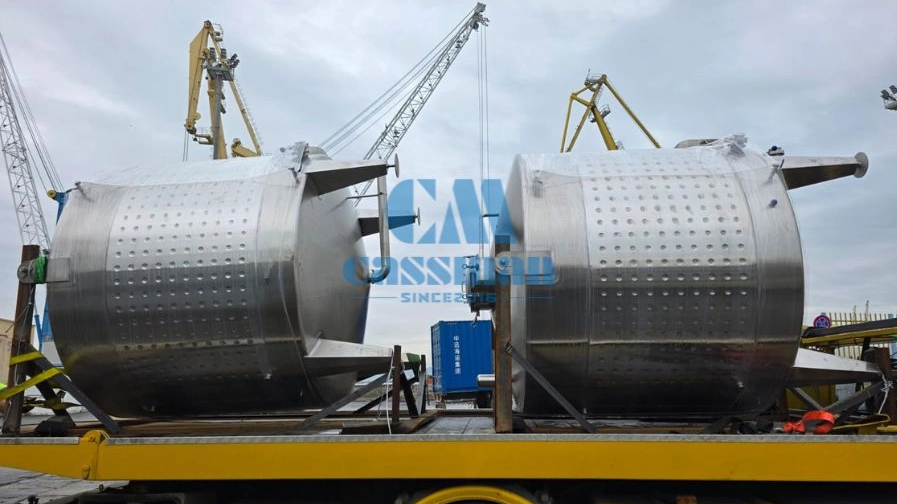
Understanding Wine Tanks: More Than Metal
Before diving into features, it is essential to categorize what you are looking for. A wine tank is a vessel engineered to facilitate fermentation, maturation, or storage.
While they may look similar, Cassman Wine Tanks are categorized by their specific roles:
Fermenters: Designed with cooling jackets and sloped bottoms to manage heat and sediment.
Storage Tanks: Often flat-bottomed or variable capacity (VC) to maximize volume for aging.
Brite Tanks: Pressure-rated vessels for carbonation (sparkling wines).
Key Factors to Consider When Buying a Wine Tank
To ensure you get the best ROI (Return on Investment), evaluate every potential purchase against these six criteria.
1. Material Quality (The Foundation)
The material interacts directly with your wine.
Stainless Steel (The Standard): 90% of modern wineries use stainless steel. It is neutral, durable, and easy to clean.
Oak: Great for adding flavor and micro-oxygenation but expensive and hard to maintain.
Plastic/Concrete: Niche uses. Plastic is hard to sanitize long-term; concrete is heavy and porous.
2. Capacity & Headspace
Size matters, but so does geometry.
The 20-25% Rule: If you are buying a tank for primary fermentation, do not buy a tank that exactly matches your juice volume. You need 20-25% extra headspace to accommodate the "cap" (grape skins) and foaming.
Variable Capacity: If you produce varying batch sizes, consider a Variable Capacity (VC) Tank with a floating lid to eliminate headspace issues.
3. Design Features (The Usability)
Look for features that make your life easier during harvest.
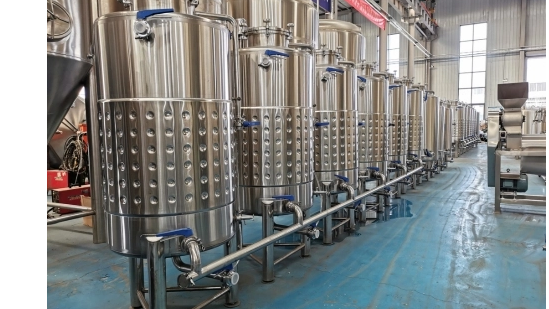
Cooling Jackets: Essential for white wine fermentation and cold stabilization. Look for dimple jackets that cover a large surface area for efficient heat transfer.
Sanitary Interior: The interior welds should be polished/ground smooth (Ra < 0.4µm) to prevent bacteria from hiding in crevices.
Racking Ports: Ensure the racking arm is located above the sediment level, or is a "rotating racking arm" for flexibility.
4. Durability and Maintenance
A cheap tank becomes expensive if it rusts or leaks.
Weld Quality: Inspect the welds. Are they smooth and sanitary, or rough and jagged? Rough welds are a sign of poor manufacturing and a future hygiene risk.
Fittings: Are the valves and manways standard sizes (e.g., Tri-Clamp or DIN)? Proprietary fittings are a nightmare to replace.
5. Cost vs. Value
Don't just look at the sticker price.
Total Cost of Ownership: A tank with poor insulation will cost you more in electricity (glycol chilling) over 5 years than the difference in upfront price.
Shipping: Tanks are bulky. Always factor in shipping costs when comparing quotes.
6. Supplier Reputation
You are buying a partnership, not just a product.
Support: Does the supplier offer technical drawings before production? Do they have a responsive support team?
Customization: Can they adjust the height/diameter ratio to fit your cellar ceiling? (At Cassman, we offer full customization).
Quick Checklist: The Perfect Tank Profile
Feature | Recommendation for Professional Use |
Material | 304 or 316 Stainless Steel |
Cooling | Dimple Jacket (covering >50% of shell) |
Bottom Shape | Conical or Sloped (for drainage) |
Manway | Shadowless (for easy cleaning) |
Finish | 2B or Mirror Polish (Sanitary) |
Conclusion
Buying a wine tank is a balance of science and economics. By prioritizing material grade, cooling efficiency, and sanitary design, you ensure that your equipment enhances your wine rather than endangering it.
Don't settle for generic vessels. Choose a tank that is engineered for the specific demands of your cellar.
Build Your Dream Cellar
Ready to find the perfect vessel? Browse our comprehensive Wine Tank Product List or contact our engineering team to design a tank that fits your exact specifications.
Frequently Asked Questions (FAQ)
Q: Should I choose a tall, skinny tank or a short, wide tank?
A: It depends on the wine. Tall, skinny tanks are better for settling and clarification (smaller surface area for sediment). Short, wide tanks are better for red wine fermentation as they provide a larger surface area for the "cap," improving color and tannin extraction.
Q: Do I really need a cooling jacket?
A: For professional quality, yes. Fermentation generates heat. Without a jacket, temperatures can spike, killing yeast or "cooking" the fruit flavors. Jackets are also essential for "Cold Stabilization" (removing tartrates) before bottling.
Q: What is the difference between a "Red Fermenter" and a "White Fermenter"?
A: Red fermenters typically have a larger manway (often a top hatch) to allow for the removal of grape skins/pomace. White fermenters deal mostly with juice, so they focus more on cooling jackets and drainage.
Let’s Build Your Dream, Together
After 20 years and 500+ projects, my greatest joy still comes from seeing our partners succeed. It’s walking into a brewpub we helped build and seeing every table full of people laughing over pints. It’s seeing a bottle of wine we contributed to on a store shelf. It’s getting an email from a distiller saying, “Our first batch of whiskey sold out in a week!”
Those moments remind me why I do this. Because building a beverage business isn’t just about equipment—it’s about building something that lasts, something that brings people together.
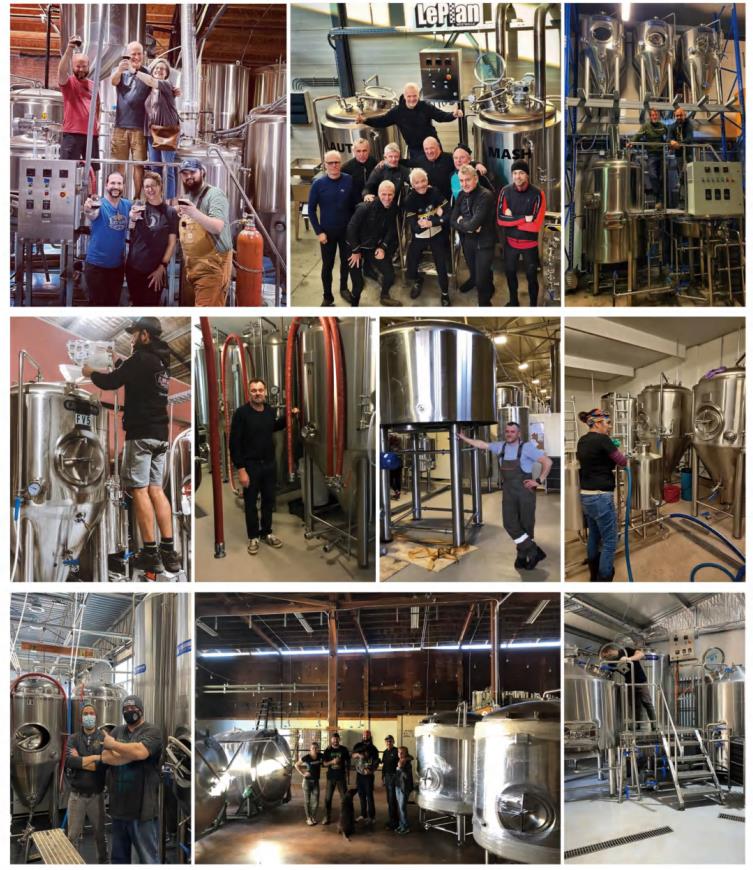
If you have a vision for a brewery, winery, or distillery—even if it’s just a sketch on a napkin—that’s the perfect place to start. Let’s have a conversation. Tell us about your dream, your space, and your goals. We’ll bring the expertise, the quality equipment, and the commitment to see it through.
Let’s turn that napkin sketch into your first pour.
Ready to start? Contact our team today:
I can’t wait to hear from you.
Cheers,
Henry Chen
CEO, Jinan Cassman Machinery Co., Ltd.


