Yeast is a Fussy Worker
In the brewing world, the recipe is the art, but fermentation is the science. You can brew the perfect wort, but if you lose control of the temperature during fermentation, all that hard work can be ruined in hours.
Yeast is incredibly sensitive. Even minor fluctuations or "hot spots" in a tank can stress the yeast, leading to the production of unwanted off-flavors like fusel alcohols (solvent-like taste) or excessive esters (fruity/bubblegum notes where they don't belong).
To brew consistent, award-winning beer, your tank needs to be more than just a steel bucket—it needs to be a precision climate control system. Let's dive into the engineering behind fermentation temperature control.
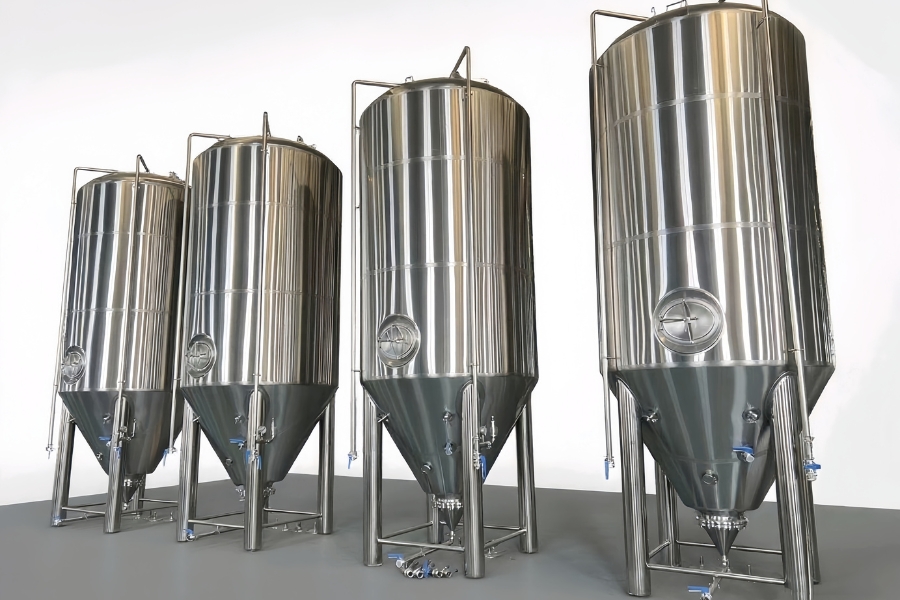
Dimple Jackets vs. Coil Jackets: The Efficiency Battle
The primary method for cooling modern tanks is circulating glycol through a jacket welded to the tank's exterior. However, not all jackets are created equal.
The Science of Turbulence
Older or cheaper tanks often use "coil" or "channel" jackets. While they work, they are often inefficient.
At Cassman, we use Dimple Jackets (also known as pillow plates). The unique dimpled texture forces the glycol to flow in a turbulent, chaotic path rather than a straight line.
Why this matters: Turbulence breaks the "boundary layer" of the fluid, significantly increasing the heat transfer coefficient.
The Result: Your beer cools down faster using less energy.
Total Coverage Design
A common cost-cutting measure in the industry is to put a jacket only on the side of the tank. We believe this is a mistake.Cassman Beer Fermenters feature dual-zone cooling:
Cylinder Jacket: Controls the main body of the liquid.
Cone Jacket: Critical for cooling the yeast cake that settles at the bottom. If the cone isn't cooled, the yeast creates its own heat (exothermic reaction), leading to autolysis (yeast death) and "meaty" off-flavors.
The Role of Insulation: Your Tank's Winter Coat
A high-performance fermenter cooling jacket is useless if the cold escapes into the room. This is where insulation becomes the unsung hero of the brewery.
Material: High-Density Polyurethane
We use high-density polyurethane insulation brewery tanks rely on. Unlike rock wool or cheaper foams, polyurethane is injected as a liquid and expands to fill every void between the inner and outer shell, creating a rigid, airtight thermal barrier.
Thickness Standards
Standard: 80mm (approx. 3 inches).
Premium: 100mm (approx. 4 inches). Many budget manufacturers reduce this to 50mm to save shipping weight and material costs. However, thinner insulation means your glycol chiller has to run more often to maintain temperature.
The Economic Impact
Investing in proper insulation is an operational expense (OpEx) strategy. A well-insulated tank reduces the load on your glycol chiller, directly lowering your monthly electricity bill and extending the lifespan of your chilling equipment.
Pressure Testing Protocols: Safety First
Fermentation creates CO2 and pressure. Furthermore, the glycol inside the jackets is pumped under pressure. A leak in the internal shell would be catastrophic, mixing toxic glycol with your beer.
The Cassman Standard
We don't just build tanks; we stress-test them.
Test Pressure: We test our jackets and tanks at pressures significantly higher than standard working conditions.
Duration: Every tank undergoes a 48-hour pressure holding test before it leaves the factory.
Verification: We monitor the gauge for any drop in pressure, ensuring the welds are microscopic-tight.
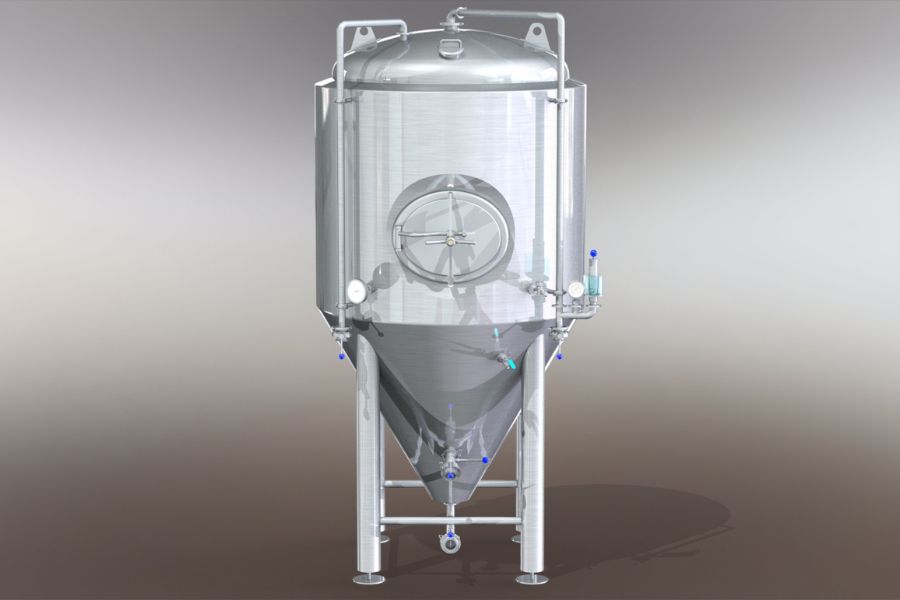
See the quality for yourself: Explore the technical specifications of our Beer Fermenters here.
Conclusion
When comparing quotes for brewery equipment, it is easy to look at the price tag and ignore the specs. But a tank with poor jacketing and thin insulation is a "leaky bucket" for your profits.
By choosing Cassman, you are investing in glycol jacket design and insulation standards that protect your beer's flavor profile and your brewery's bottom line.
Worried about your brewery's energy efficiency?
Don't let poor equipment drive up your utility bills. Click here to consult with our engineers about our high-efficiency insulated tanks and get a quote that balances performance with value.
Frequently Asked Questions (FAQ)
Q: Why is cooling the cone of the fermenter important?A: Yeast settles in the cone. As it packs together, it generates heat. If this heat isn't removed via a cone jacket, the yeast can die (autolysis), releasing rubbery or meaty flavors into your beer.
Q: What is the best insulation material for beer tanks?A: Polyurethane (PU) is the industry standard. It offers the best R-value (thermal resistance) per inch and adds structural rigidity to the tank, preventing denting of the outer cladding.
Q: How does a dimple jacket work?A: A dimple jacket is spot-welded to the tank shell and then inflated with high pressure to create a space for glycol. The "dimples" create turbulence in the coolant flow, which scrubs heat away from the tank wall much faster than smooth channels.
Q: What pressure are Cassman tanks rated for?A: Our standard Unitanks are typically designed for a working pressure of 15-30 PSI (depending on the model), but we test them at higher pressures to ensure a wide safety margin.


