“If your CIP isn’t validated, it’s just hope with a pump.”
— A veteran brewmaster I worked with in Oregon
Why This Guide Exists (And Why Most CIP SOPs Fail)
Over the past decade, I’ve audited more than 60 craft and industrial breweries across North America and Europe. The most common flaw? CIP procedures copied from supplier brochures—never validated on actual equipment.
A truly effective CIP isn’t about running a timer. It’s about removing soil, killing microbes, and proving it—every time. This guide gives you the exact parameters, decision logic, and troubleshooting tactics I use when consulting for production facilities. No fluff. Just what works.
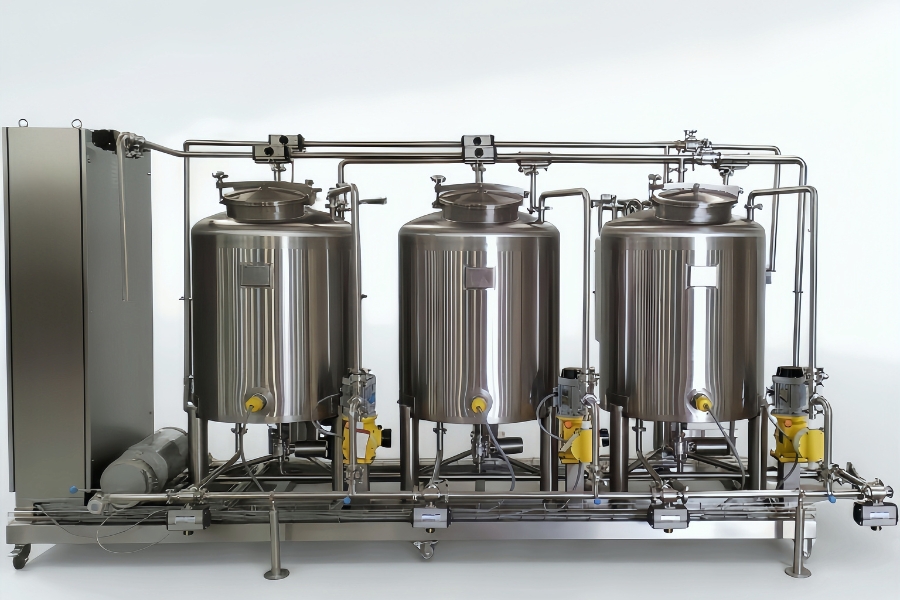
What’s Covered
What CIP Must Achieve (Beyond “Looks Clean”)
Step-by-Step CIP Sequences by Equipment Type
Choosing the Right Chemicals—Without Guessing
Critical Sensors & Records You Can’t Skip
Safety, Material Compatibility & Environmental Compliance
Real-World Troubleshooting: Fixes That Stick
Cutting CIP Costs Without Sacrificing Cleanliness
Quick Reference Tables & Audit Checklist
FAQs From Brewers Like You
1. What CIP Must Achieve (Beyond “Looks Clean”)
CIP has one job: remove organic/inorganic soils and eliminate microbial risk—without disassembling equipment. But “clean” isn’t visual. It’s measurable.
Know your soil profile:
Hot-side (mash tun, kettle): Protein-tannin complexes, hop resins, caramelized sugars, inorganic scale.
Cold-side (fermenters, bright tanks, lines): Yeast residues, calcium oxalate (“beer stone”), and worst of all—biofilm.
Validation = Visual + Quantitative Proof
Your CIP is only valid if you can show:
Effluent turbidity < 50 NTU (or visually clear)
Conductivity returns to baseline after rinses
Target temperature and flow maintained throughout
ATP swabs ≤ 100 RLU (or site-specific limits)
Sanitizer contact time fully achieved
If you’re not measuring these, you’re gambling with flavor stability and contamination.
2. Step-by-Step CIP Sequences by Equipment Type
Note: These are baseline parameters. Always cross-check with your tank/heat exchanger OEM manual and chemical supplier data sheets.
2.1 Fermenters & Bright Tanks (SS 304/316, Rotary Spray Ball)
Step | Parameters | Key Checks |
Pre-rinse | 25–40°C, 5–10 min | Stop when effluent is clear (<100 NTU) |
Caustic Wash | 1.0–2.0% NaOH, 60–70°C, 15–30 min | Flow must be turbulent (Re > 4000); verify spray ball ΔP |
Intermediate Rinse | Ambient–40°C | Rinse until conductivity matches supply water |
Acid Wash (weekly or as needed) | 0.5–1.0% nitric/phosphoric blend, 40–60°C, 10–20 min | Critical for beer stone control |
Final Rinse | To neutral pH & baseline conductivity | No residual chemical smell |
Sanitize | 100–300 ppm PAA, 10–15 min contact | Drain completely; do not rinse before closing |
2.2 Transfer Lines, Valves & Manifolds
2.3 Plate Heat Exchangers
Step | Parameters | Notes |
Pre-rinse | Forward + reverse flush | Dislodge trapped solids |
Caustic | 1.0–2.0% NaOH, 70–80°C, 20–30 min | Use non-foaming surfactant |
Acid | 0.5–1.0% blend, 50–60°C, 10–20 min | Prevents scale buildup between plates |
Sanitize | 150–300 ppm PAA | Validate with ΔP trend + optional swabs |
3. Choosing the Right Chemicals—Without Guessing
Don’t pick chemicals based on price alone. Match them to your soil type, material, and process constraints.
Type | Purpose | Typical Use | Warnings |
Alkaline (NaOH/KOH) | Breaks down proteins, hop resins, fats | 1–2% at 60–80°C | Avoid stagnant hot caustic—causes stress corrosion cracking |
Acid (HNO₃/H₃PO₄ blend) | Dissolves beer stone & scale | 0.5–1.0% at 40–60°C | Never use hydrochloric acid—chlorides pit stainless steel |
Sanitizer (PAA) | Broad-spectrum kill, no-rinse | 100–300 ppm, 10–15 min | Stable at low temps; degrades if mixed with caustic residue |
Additives | Boost performance | Low-foam surfactants, EDTA chelators | Ensure food-grade certification |
Gasket Compatibility Matters
EPDM handles caustic well but degrades in strong acids. FKM (Viton) tolerates PAA and acids but is costly. Always check your gasket spec sheet before changing chemistries.
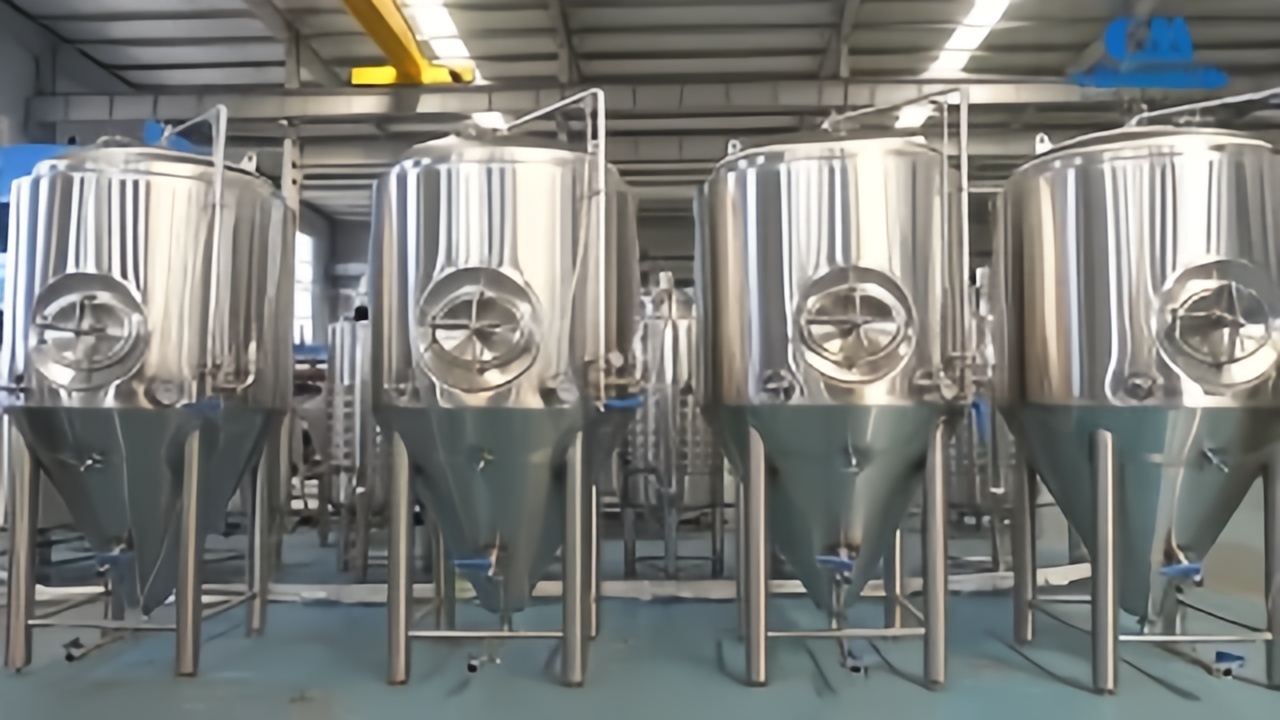
4. Critical Sensors & Records You Can’t Skip
“If it isn’t recorded, it didn’t happen”—especially during FDA or BRC audits.
Essential Sensors:
Conductivity (for concentration & rinse endpoints)
Temperature (at multiple points)
Flow meter or pressure (to confirm turbulence)
Return-line turbidity (optional but powerful)
Spray ball differential pressure
Records to Keep Per Cycle:
Asset ID & batch number
Operator name
Start/end times
Actual vs. setpoint temps, flows, concentrations
Chemical lot numbers
ATP/swab results
Any deviations & corrective actions
This isn’t paperwork—it’s your defense against recalls.
5. Safety, Material Compatibility & Environmental Compliance
Treat CIP like a controlled chemical process—not a utility task.
PPE Non-Negotiables:
Chemical goggles + face shield
Acid/alkali-resistant gloves (e.g., neoprene)
Apron & non-slip boots
Local exhaust at mixing stations
Storage & Handling:
Always add chemical to water—never water to chemical.
Store PAA below 30°C in vented containers (it off-gases oxygen).
Use secondary containment for all bulk totes.
Environmental Tips:
Compliance Frameworks:
Align with HACCP, ISO 22000, and local OSHA/EPA rules.
Follow OEM manuals—they override generic advice.
6. Real-World Troubleshooting: Fixes That Stick
Symptom | Likely Cause | Field-Tested Fix |
Beer stone keeps returning | Infrequent/weak acid wash; hard water | Run acid CIP 0.8–1.0% at 55°C weekly; install RO or softener |
Excessive foaming in caustic step | CO₂ trapped in lines or wrong surfactant | Pre-rinse with 40°C water to degas; switch to low-foam detergent |
Shadowed areas in tank | Clogged/undersized spray ball; poor venting | Perform riboflavin test; verify pump curve matches spray spec |
Biofilm in transfer lines | Dead legs (>1.5 pipe diameters); low flow | Redesign piping; increase velocity to 1.8 m/s minimum |
High ATP after CIP | Incomplete rinsing or valve sequencing error | Rinse to conductivity baseline; audit valve logic in PLC |
7. Cutting CIP Costs Without Sacrificing Cleanliness
You don’t need to spend more—you need to spend smarter.
Reuse caustic: With inline filtration and conductivity monitoring, many breweries safely reuse 2–3 cycles. Set discard limits by COD or use count.
Recover heat: Install a heat exchanger on CIP return lines—preheats incoming water.
Batch CIP runs: Clean multiple tanks in sequence to reduce heat loss and downtime.
Right-size pumps: Oversized pumps create unnecessary shear, foam, and energy waste.
Preventive Maintenance Pays Off:
Replace gaskets on schedule (don’t wait for leaks)
Inspect spray balls quarterly
Calibrate sensors every 3 months
8. Quick Reference Tables & Audit Checklist
CIP Parameters by Asset
Asset | Alkaline Wash | Acid Wash | Sanitizer | Key Sensors |
Fermenter/Brite Tank | 1–2% NaOH, 60–70°C, 15–30 min | 0.5–1.0% blend, 40–60°C | PAA 100–300 ppm, 10–15 min | Conductivity, Temp, Turbidity, Spray ΔP |
Lines/Valves | Same conc., 1.5–2.0 m/s flow | 0.5–1.0%, 40–60°C | PAA 100–300 ppm | Conductivity, Temp, Flow |
Plate Heat Exchanger | 1–2% NaOH, 70–80°C, 20–30 min | 0.5–1.0%, 50–60°C | PAA 150–300 ppm | ΔP, Temp, Conductivity |
Daily CIP Audit Checklist
Pre-rinse effluent clear?
Conductivity returned to baseline after each rinse?
Caustic/acid at target temp and concentration?
Sanitizer contact time logged and verified?
ATP/swab results within limits and archived?
Remember: These are starting points. Always validate with your specific equipment, water quality, and beer portfolio.
9. FAQs From Brewers Like You
Q: Do I always need both caustic and acid steps?
A: Not daily. For cold-side tanks, caustic + sanitizer is sufficient for routine cleaning. Add acid weekly—or immediately if you see white crust (beer stone).
Q: Is “no-rinse” PAA really safe?
A: Yes—if used at 100–300 ppm, with full contact time, and proper draining/drying. Always verify with PAA test strips and comply with local food safety regulations.
Q: How do I prove spray ball coverage?
A: Two ways:
Engineering method: Confirm pump flow/pressure matches spray ball specs.
Visual method: Perform a riboflavin (vitamin B2) test under UV light—standard in pharma and increasingly in craft brewing.
Q: Can I reuse caustic?
A: Yes—with controls. Use conductivity + filtration to monitor strength and particulates. Discard after 2–3 uses or if COD exceeds 500 mg/L.
Final Thought
Great CIP isn’t about fancy equipment—it’s about consistency, verification, and respect for the science. Implement these steps, measure your results, and adjust. Your beer (and your customers) will thank you.
— Written by a brewing process engineer with 15+ years in craft and industrial beer production. All recommendations field-tested across 60+ facilities.
Ready to turn this into an SOP? Download our editable CIP log template [link] or contact us for a facility-specific CIP audit.


