The Evolution of the Cellar
The brewing industry is standing at a crossroads. While the art of recipe creation remains timeless, the science of production is advancing at breakneck speed. Faced with rising energy costs, water scarcity, and a consumer base that demands absolute consistency, breweries can no longer rely on "old-school" methods alone.
The humble Brite Beer Tank (BBT) is evolving. No longer just a passive stainless steel vessel for storage, modern BBTs are becoming active, intelligent components of the brewing ecosystem.
In this article, we explore the emerging trends in Brite beer tanks—from smart automation to sustainable engineering—and how these innovations are helping breweries stay competitive in a crowded market.
Technological Innovations: Smarter, Stronger, Cleaner
The most significant shift in brewing technology innovations is the integration of digital intelligence and advanced materials into physical hardware.
1. The Rise of the "Smart Tank" (IoT Integration)
The future of brewing is data-driven. Modern Brite tanks are increasingly being equipped with IoT (Internet of Things) sensors that provide real-time data to the brewer's smartphone or central control panel.
Automated Temperature Profiling: Instead of a simple thermostat, smart controllers monitor temperature stratification across the tank, automatically adjusting glycol flow to specific zones to ensure uniform cooling without freezing.
Digital Pressure Management: Automated spunding valves (bunging valves) linked to digital sensors allow for precise, hands-free carbonation, reducing CO2 waste and ensuring exact volumes of CO2 every time.
2. Advanced Material Engineering
While 304 Stainless Steel remains the industry standard, the fabrication techniques are changing.
Laser Welding Technology: At Cassman, we utilize advanced laser welding for cooling jackets. This technique handles higher pressures and improves the longevity of the tank compared to traditional spot welding.
Surface Treatment: New electropolishing techniques are pushing surface finishes below Ra 0.4μm, making the steel even more resistant to bacterial adhesion and easier to clean.
Sustainability Trends: Brewing Greener
Sustainability is no longer a buzzword; it is a business necessity. Brite beer tank trends are heavily influenced by the need to reduce the carbon footprint of each pint.
1. Energy-Efficient Cooling Designs
Cooling is the largest energy consumer in the cellar.
Zoned Glycol Jackets: Modern tanks feature independently controlled cooling zones. If a 20 BBL tank is only half full, the system is smart enough to only cool the bottom jacket, saving massive amounts of electricity.
High-Performance Insulation: We are seeing a shift toward thicker, high-density Polyurethane insulation (100mm+) to minimize thermal loss, essentially turning the Brite tank into a giant thermos that holds temperature for days with minimal power.
2. Water Conservation via Design
Water is precious. Innovations in tank geometry and CIP (Clean-In-Place) efficiency are reducing water usage.
Market Demand Shifts: Flexibility is King
The market is shifting away from "one-size-fits-all" production toward agility and customization.
1. The Demand for Flexible Batch Sizes
With the explosion of seasonal releases and limited-edition brews, craft breweries need equipment that adapts.
Variable Capacity Tanks: There is a growing trend for Brite Beer Tanks designed to handle partial batches effectively without oxidation risks, allowing brewers to split a fermenter into two different finished beers (e.g., one dry-hopped, one fruited).
2. Stackable and Space-Saving Designs
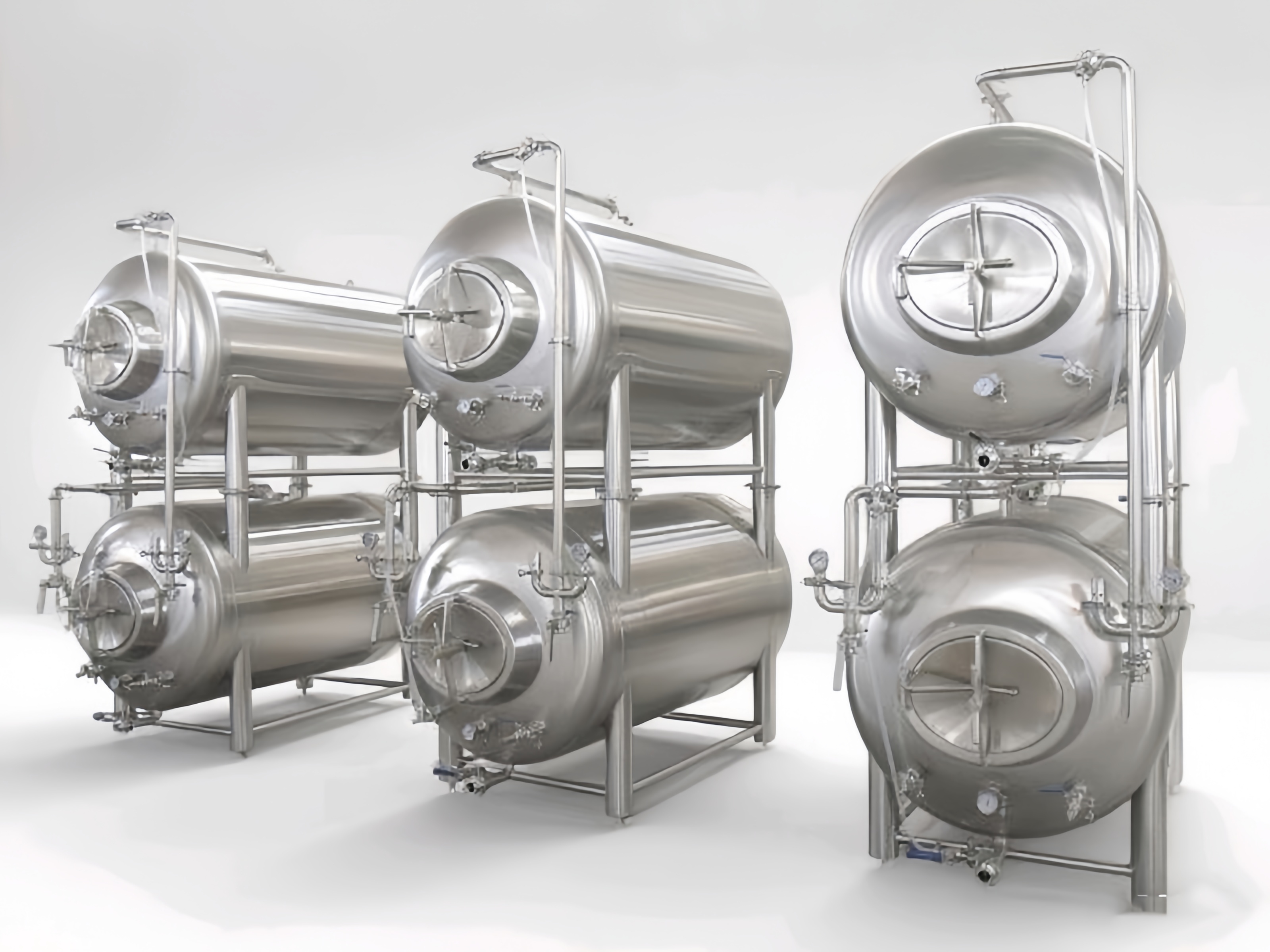
For urban breweries where real estate is expensive, horizontal or stackable Brite tanks are becoming popular. These designs maximize vertical space, allowing small taprooms to increase their serving capacity without renting more square footage.
Conclusion: The Future is Bright (and Efficient)
The future of brewing equipment lies in the balance between robust hardware and intelligent software. The Brite Beer Tank of tomorrow is a precision instrument that saves energy, reduces waste, and guarantees quality.
For brewery owners, keeping up with these trends isn't just about having the "coolest" gear—it's about building a sustainable business model that can weather economic fluctuations.
At Cassman, we are constantly innovating our manufacturing processes to meet these future demands. Whether it's through smarter cooling jackets or sanitary engineering, we are ready to equip the next generation of breweries.
Future-Proof Your Brewery
Are you looking for equipment that meets modern efficiency standards? Explore Cassman’s advanced Brite Beer Tanks and see how we integrate the latest technology into our designs.
Frequently Asked Questions (FAQ)
Q: Can older Brite tanks be retrofitted with smart technology?
A: Yes, to an extent. You can often upgrade analog thermometers and pressure gauges to digital, IoT-enabled sensors. However, upgrading insulation or cooling jacket efficiency usually requires replacing the tank.
Q: How do modern Brite tanks save money on CO2?
A: Through the use of high-efficiency carbonation stones and precise pressure control. Modern stones create finer bubbles for faster absorption, and automated pressure valves prevent over-gassing and venting, which wastes CO2.
Q: What is the benefit of laser-welded cooling jackets?
A: Laser welding creates a stronger bond with less heat distortion than traditional welding. This results in a cooling jacket that can withstand higher glycol pressures and has a longer service life with fewer leaks.
Q: Are stackable Brite tanks hard to clean?
A: Not if they are designed correctly. Cassman’s stackable tanks are engineered with accessible side manways and dedicated CIP piping for each vessel, ensuring that the top tank is just as easy to clean as the bottom one.


