The Guardian of Beer Quality
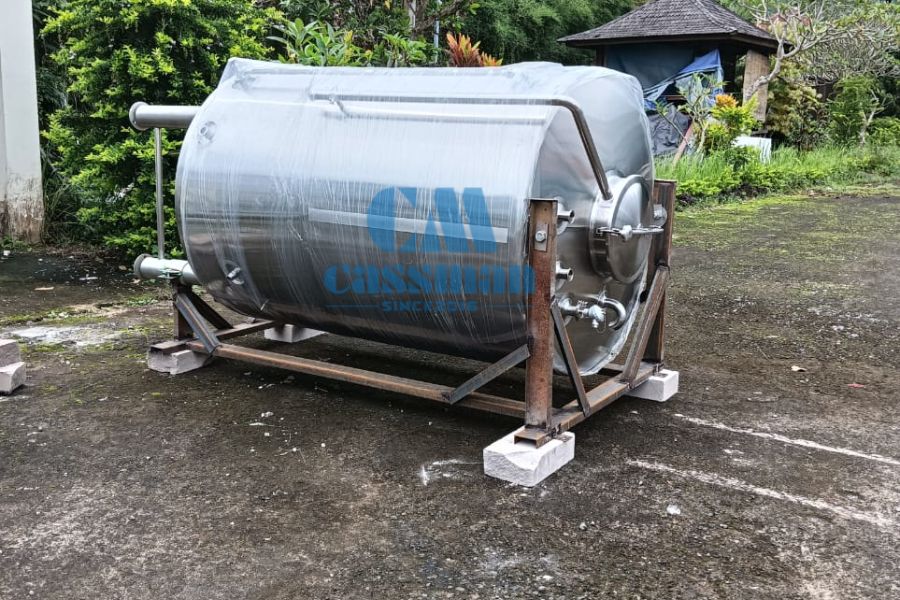
The Brite Beer Tank (BBT) is the final guardian of your beer before it reaches the customer's glass. It is where clarity is perfected, carbonation is dialed in, and the flavor profile is locked.
However, even the highest quality stainless steel vessel cannot compensate for poor operation or neglected maintenance. A dirty carbonation stone can ruin a batch's head retention, and a faulty pressure relief valve can turn a routine day into a safety hazard.
In this guide, we outline the best practices for operating and maintaining your Cassman Brite Beer Tank to ensure safety, longevity, and the perfect pint every time.
Operating Your Brite Beer Tank: Precision is Key
Operating a BBT is less about "cooking" and more about physics. Here are the three pillars of successful operation.
1. The Transfer Process (Fighting Oxygen)
The transfer from the fermenter to the Brite tank is the most critical moment for shelf stability.
Purge, Purge, Purge: Before beer enters, the tank must be purged of oxygen. Fill the tank with sanitizer, push it out with CO2, and repeat.
Isobaric Transfer: Ensure the pressure in the Brite tank matches the fermenter. This prevents foaming and minimizes volatile aroma loss during the move.
2. Temperature Management
Carbonation follows Henry’s Law: gas dissolves better in colder liquids.
Chill First: Ensure your glycol jackets are active and the tank is pre-chilled or rapidly cooled to 0°C - 1°C (32°F - 34°F) before you start carbonating aggressively.
Monitor the Shadow: Remember that the temperature probe is in one spot. Allow time for the liquid temperature to equalize throughout the tank.
3. Carbonation Stone Management
The "Carb Stone" is the heart of the BBT.
Wetting Pressure: Do not just blast gas into the stone. You must overcome the "wetting pressure" (the resistance of the liquid against the stone's pores).
Slow and Steady: Increase CO2 pressure gradually. Rapid carbonation creates large bubbles that leave the solution quickly (creating "burps" at the tap), whereas slow carbonation creates the fine, creamy head customers love.
Maintenance Best Practices: A Checklist
Routine brewing equipment care prevents downtime. Implement this maintenance schedule for your cellar.
1. Cleaning the Carbonation Stone (The #1 Issue)
The microscopic pores (usually 2 microns) of the carb stone clog easily with beer stone and organic matter.
The Acid Soak: After the CIP cycle, remove the stone and soak it in an acid solution to dissolve mineral deposits.
Never Touch It: Never touch the stone with bare hands. Oils from your skin can clog the pores and affect bubble formation. Handle it with gloves or by the stem only.
2. CIP (Clean-In-Place) Protocols
Caustic Cycle: Use hot caustic soda to remove organic soils. Ensure the spray ball is spinning freely.
Acid Cycle: Follow with an acid cycle to passivate the stainless steel and remove mineral scale.
Shadow Areas: Manually inspect and clean the sample valve, sight glass, and manway gaskets, as spray balls sometimes miss these crevices.
3. Safety Valve (PRV) Inspection
Your Pressure Relief Valve (PRV) is your primary safety device.
4. Gasket Integrity
Inspect all EPDM or Silicone gaskets on the manway and ports monthly. Cracks in gaskets are a prime entry point for oxygen and bacteria.
Common Issues and Troubleshooting
Even with perfect Brite beer tank maintenance, issues can arise. Here is how to solve them.
Problem 1: Beer is Flat / Won't Carbonate
Cause: The carbonation stone is likely clogged ("blinded").
Solution: Remove the stone and perform a deep acid clean or boil it in water to clear the pores. Also, check for CO2 leaks in the supply line.
Problem 2: Foaming at the Sample Valve
Cause: The tank is too warm, or the sample valve is dirty (nucleation sites).
Solution: Check the glycol temperature. If the temp is fine, disassemble and clean the sample valve (pigtail).
Problem 3: Metallic Taste in Beer
Cause: The stainless steel passivation layer may be compromised, or there is rust in the system.
Solution: Perform a high-concentration acid passivation cycle on the tank to restore the protective chromium oxide layer.
Conclusion
A Brite Beer Tank is a long-term investment. While Cassman tanks are built to last with sanitary welds and high-grade 304 stainless steel, they rely on the brewer to keep them in peak condition.
By following strict CIP procedures, caring for your carbonation stones, and respecting pressure limits, your Brite tank will deliver crystal-clear, perfectly carbonated beer for decades.
Need Spare Parts?
Is your carb stone clogged beyond repair, or do you need new manway gaskets? Contact our support team for genuine replacement parts and technical advice.
Frequently Asked Questions (FAQ)
Q: How often should I clean my carbonation stone?
A: Ideally, the stone should be cleaned after every batch. At a minimum, it should be soaked in acid every 3-5 batches to prevent permanent clogging from beer stone (calcium oxalate).
Q: Can I use chlorine/bleach to clean my Brite Tank?
A: No! Never use chlorine-based cleaners on stainless steel. Chlorine causes pitting corrosion, which creates microscopic holes where bacteria can hide and eventually ruins the structural integrity of the tank.
Q: What is the maximum pressure for a standard Brite Tank?
A: Most standard Brite tanks are rated for a working pressure of 15-30 PSI (1-2 Bar). Always check the data plate on your specific tank. Never exceed the rated pressure, as it can deform the tank or cause a rupture.
Q: Why is my tank imploding (sucking in)?
A: This usually happens during CIP. If you rinse a hot tank with cold water and the vacuum relief valve is stuck or undersized, the rapid temperature drop creates a vacuum that crumples the steel. Always ensure your PRV/Vacuum breaker is clean and functional.


