The Invisible Battle for Beer Quality
In the brewing world, flavor is king, but hygiene is the kingdom's defense. You can have the best recipe and the finest hops, but if your equipment harbors bacteria, your beer is doomed.
Unlike the hot side of the brewhouse where boiling kills microbes, the "Cold Side"—specifically the Brite Beer Tank (BBT)—is vulnerable. At this stage, the beer is finished. There is no active yeast to outcompete spoilage organisms, and sugar levels might be low, but the risk of infection (like Lactobacillus or Pediococcus) or off-flavors remains.
This is why sanitary design is not a luxury; it is a necessity. In this article, we explore how Cassman Brite Beer Tanks are engineered to prevent contamination and ensure that the beer in the glass tastes exactly as the brewer intended.
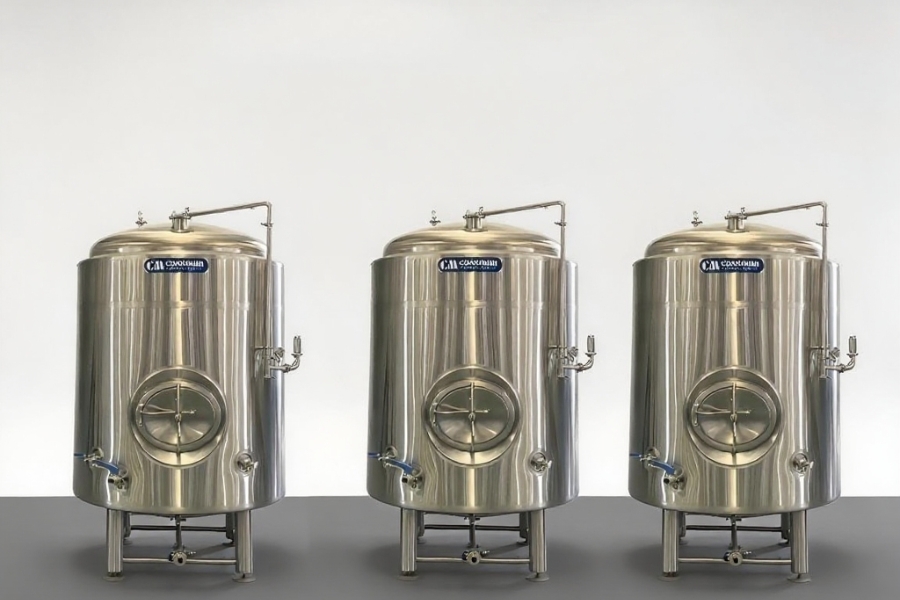
Understanding Sanitary Design: It’s All in the Details
"Sanitary design" means engineering equipment so that it can be cleaned effectively and has no place for bacteria to hide. For a Brite tank, this comes down to three critical engineering standards.
1. Surface Finish (The Ra Value)
Microbes are microscopic. If the stainless steel surface is rough, it creates "valleys" where bacteria can hide from chemical cleaners.
The Standard: We measure smoothness in Ra (Roughness Average).
Cassman Spec: Our tanks feature an interior polish of Ra ≤ 0.4μm. This creates a mirror-like finish that is too smooth for biofilm to adhere to, ensuring that a simple chemical wash can remove 100% of organic soil.
2. Elimination of "Dead Legs"
A "dead leg" is a section of pipe or a fitting where liquid does not flow freely. Stagnant beer is a breeding ground for infection.
3. Welding Quality
A poor weld with pits or cracks is a permanent infection risk.
The Process: All our joints are TIG welded and fully passivated. Passivation removes free iron from the surface and creates a protective chromium oxide layer, preventing rust and ensuring a smooth, continuous surface.
Preventing Contamination: Hardware & Hygiene
Beyond the steel itself, the accessories and fittings play a huge role in preventing contamination in brewing.
Shadowless Manways
Old-style tanks often had manways that protruded into the tank, creating a "shadow" behind them where the spray ball's water jet couldn't reach.
Sanitary Sampling Valves
The sample valve is the most touched part of the tank and a common vector for infection.
The Role of Gaskets
Rubber gaskets (EPDM or Silicone) eventually degrade. A cracked gasket is a bacterial trap.
Cleaning and Maintenance Protocols: The CIP Advantage
Even the best sanitary design requires proper operation. The CIP (Clean-In-Place) system is how you leverage the tank's design for maximum hygiene.
1. The Spray Ball Mechanics
Our Brite tanks are equipped with Rotary Spray Balls. Unlike static balls that just cascade water down the walls, rotary balls spin to project high-impact jets against the interior surfaces. This mechanical action scrubs the tank without the need for manual brushing.
2. The Cleaning Cycle
To maintain the sanitary condition of your Brite Tank, follow this standard protocol:
Pre-Rinse: Warm water to remove bulk yeast/beer.
Caustic Wash: Hot caustic soda (typically 2-3%) to break down organic proteins.
Acid Rinse: To neutralize the caustic and remove mineral stones (beer stone).
Sanitizer: Peracetic acid (PAA) or similar to kill any remaining microbes immediately before the next fill.
Pro Tip: Always inspect your spray ball periodically. A clogged spray ball means part of your tank isn't getting cleaned.
Conclusion
Hygiene is the foundation of consistency. A Sanitary Design Brite Tank is an insurance policy against spoiled batches and recalled products.
By investing in equipment with the correct surface finish (Ra), shadowless fittings, and high-quality welding, you are not just buying a steel vessel; you are buying peace of mind. At Cassman, we build our tanks to meet the strictest international sanitary standards so you can focus on brewing, not worrying about bacteria.
Upgrade Your Hygiene Standards
Ready to secure your beer quality? Contact Cassman to learn more about our sanitary welding processes and quality control measures.

Frequently Asked Questions (FAQ)
Q: What does "Ra" mean in tank specifications?
A: Ra stands for "Roughness Average." It measures the microscopic texture of the steel surface. A lower number means a smoother surface. For brewing, Ra ≤ 0.4μm is the gold standard to prevent bacterial growth.
Q: Why is passivation important for Brite tanks?
A: Passivation is a chemical treatment that removes free iron from the stainless steel surface and enhances the natural protective layer (chromium oxide). This prevents rust and ensures the tank remains chemically inert and sanitary.
Q: How do I know if my spray ball is working?
A: You should hear the "whoosh" of the spinning ball during CIP. Visually, you can open the manway (after safety checks) to ensure all surfaces are wet. Periodically remove the spray ball to check for debris clogging the holes.
Q: Can I use a scratch pad to clean the inside of my tank?
A: Never. Using abrasive pads (like green Scotch-Brite) scratches the mirror finish. These micro-scratches increase the Ra value and create homes for bacteria that chemicals cannot reach. Only use soft cloths or chemical cleaning.


