Home » Our Services » Blog » Common Mistakes When Starting a Brewery and How to Avoid Them
Common Mistakes When Starting a Brewery and How to Avoid Them
Author: Henry Chen Publish Time: 2026-07-29 Origin: CASSMAN
Table of Contents
Toggle
Starting a brewery is exciting, but it is also one of the easiest ways to discover how many expensive mistakes can fit inside one building. Most new brewery owners focus on the visible parts of the project — brewhouse size, fermenters, branding, taproom design, and equipment pricing. Those are all important, but many early problems come from decisions made before the first batch is even brewed.
In reality, a successful brewery startup depends on more than choosing equipment. It requires matching production goals with layout, fermentation capacity, utilities, workflow, supplier structure, and long-term operating needs. When these decisions are not aligned from the beginning, breweries often face delays, unexpected costs, inefficient production flow, or equipment that does not truly fit the business.
This guide looks at some of the most common mistakes new breweries make and explains how to avoid them with more practical planning.
Why So Many Brewery Startups Run into Problems
Many startup breweries do not fail because they lack passion. They struggle because early planning is often fragmented.
A founder may choose a brewhouse based on budget, select fermenters later, think about glycol after the tanks are ordered, and only discover utility limitations when installation begins. In other cases, the equipment itself may be decent, but the layout is inefficient, the fermentation capacity is too small, or the supplier structure creates coordination issues.
The biggest lesson is simple: a brewery is a system, not a shopping list.
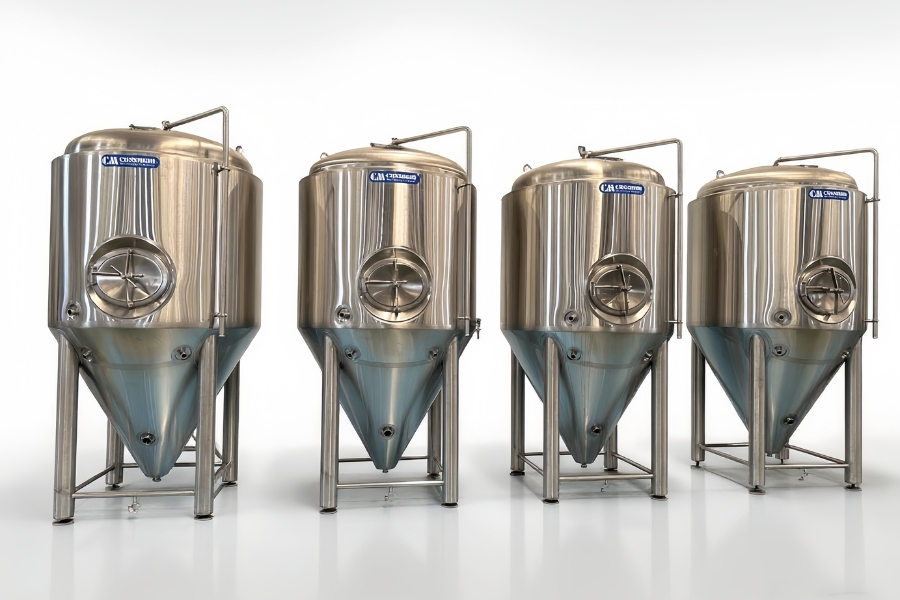
New breweries often focus heavily on the brewhouse because it looks like the “main equipment.” In real production, however, fermentation capacity is often the true bottleneck.
You can brew wort quickly, but you cannot rush fermentation just because your calendar is feeling ambitious.
If a brewery installs a brewhouse that can produce more than the cellar can absorb, the result is limited scheduling flexibility, reduced output, and inefficient use of capital.
Common fermentation planning errors
too few fermenters
fermenters that are too small
no allowance for different beer styles with different tank residency times
no room for seasonal or specialty production
weak coordination between brewhouse output and cellar capacity
A brewery layout may look simple when equipment is viewed individually. But once tanks, piping, operators, drains, hoses, utilities, and cleaning access all enter the picture, the space suddenly becomes much more complicated.
Many startup breweries underestimate:
working aisle requirements
tank access needs
future expansion space
forklift or material movement routes
packaging flow
drain placement
utility routing
The result can be a brewery that technically fits on paper but works poorly in practice.
How to avoid it
Layout planning should begin early and should connect directly to production workflow.
Many new brewery owners spend weeks comparing tanks and brewhouses, then treat utilities as a later contractor issue. That is a very expensive way to learn that stainless steel does not run on optimism.
Power, water, steam or electric heating, drainage, glycol cooling, compressed air, and ventilation all affect how well the brewery can actually operate.
Problems caused by weak utility planning
insufficient electrical capacity
poor drainage around brewhouse and cellar
undersized glycol systems
hot water limitations
difficult piping routes
installation delays
expensive building modifications
How to avoid it
Plan utilities as part of the equipment decision process, not after it.
Mistake 5: Choosing the Wrong Brewhouse Configuration
Many first-time brewery buyers assume bigger or more complex always means better. In reality, the right brewhouse depends on production rhythm, labor strategy, beer mix, and budget.
A brewery that does not need the extra complexity of a larger multi-vessel system may overspend. On the other hand, a brewery trying to scale with an overly limited brewhouse may create production pressure too early.
Some startup breweries plan the brewhouse and fermentation system carefully, then leave packaging decisions until very late. That can lead to infrastructure and workflow problems.
Packaging affects:
electrical load
compressed air demand
CO2 use
drainage
finished goods movement
labor allocation
cold-side scheduling
If a brewery intends to can, bottle, or keg regularly, the packaging process should be considered much earlier.
Some startups build only for their current size and leave no practical room for expansion. That can create a second wave of avoidable cost very quickly.
Common examples include:
no spare fermentation space
no utility margin
no room for additional tanks
no packaging expansion area
no future piping logic
brewhouse sizing that becomes limiting too quickly
How to avoid it
Even if the initial project must stay lean, think ahead.
Plan where possible for:
additional fermenters
future glycol load
utility oversizing where justified
layout flexibility
equipment additions without major disruption
Growth planning is not about overspending early. It is about avoiding decisions that trap the brewery later.
Mistake 9: Working Without a Clear Project Sequence
Another common problem is trying to make decisions in the wrong order. For example, some breweries finalize tank orders before utilities are reviewed, or commit to a layout before production targets are clarified.
That usually leads to redesign, delay, or compromise.
How to avoid it
A more practical project sequence is:
define production goals
estimate market and packaging model
choose brewhouse configuration
size fermentation capacity
plan layout
calculate utilities
confirm supplier strategy
finalize detailed equipment list
When the sequence makes sense, the project becomes much easier to manage.
Mistake 10: Assuming Passion Can Replace Planning
Passion is essential in brewing. It drives the brand, the recipes, and the perseverance needed to build a brewery. But passion alone does not solve utility load calculations, fermentation bottlenecks, or drainage placement.
The breweries that start more smoothly are usually the ones that respect both sides of the business:
creative ambition
operational discipline
How to avoid it
Treat the brewery as both:
a craft production environment
an industrial process system
That mindset helps founders make more balanced decisions from the beginning.
A Quick Summary of the Most Common Mistakes
Below is a simple overview of the most frequent startup issues and the practical way to think about them.
Common Mistake
What Goes Wrong
Better Approach
Choosing equipment too early
Equipment does not match business goals
Define production targets first
Underestimating fermentation
Cellar becomes the bottleneck
Plan tank count and usage realistically
Delaying layout planning
Poor workflow and installation friction
Integrate layout early
Ignoring utilities
Expensive infrastructure problems
Plan power, water, glycol, drainage in advance
Buying on price alone
Hidden long-term cost
Compare total project value
Treating packaging too late
Flow and utility conflicts
Include packaging in early planning
No growth planning
Expansion becomes costly
Leave room for future scale
This table simplifies the picture, but the key idea is consistent: most startup mistakes come from disconnecting one part of the project from the others.
Final Thoughts
Starting a brewery involves dozens of decisions, and mistakes are always possible. But many of the most common problems are also avoidable when founders plan the brewery as a complete system rather than a list of equipment purchases.
The most successful startup projects usually share a few habits:
they define production goals clearly
they size fermentation realistically
they plan layout and utilities early
they think about packaging before it becomes urgent
they evaluate suppliers beyond price alone
they leave room for future growth
At Cassman, we believe brewery planning works best when equipment, process, infrastructure, and workflow are considered together. A new brewery does not need perfect predictions. But it does need practical decisions made in the right order.
That is often the difference between a brewery that grows with confidence and one that spends its first year solving preventable problems.
Ready to Build Your Brewery with a Trusted Partner?
Don't navigate the world of brewery manufacturing alone. Let my team of experienced engineers provide you with a no-obligation quote and a preliminary design for your project.