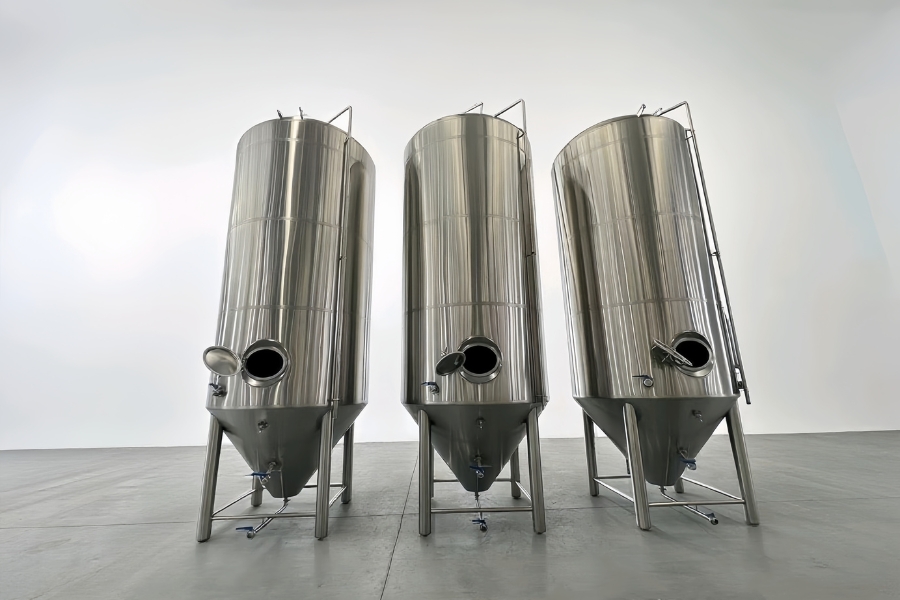
Home » Our Services » Blog » Brewery Equipment FAT Checklist: What to Test Before Your 10HL System Ships
Brewery Equipment FAT Checklist: What to Test Before Your 10HL System Ships
Author: Henry Chen Publish Time: 2026-10-27 Origin: Cassman
Ordering a brewery from an overseas manufacturer involves a moment of particular risk: the equipment is finished, but it has not shipped yet.
At this stage, some problems are relatively easy to identify and correct. After the equipment is packed, exported and installed, the same problems may take much longer—and cost much more—to resolve.
That is why experienced brewery buyers define a Factory Acceptance Test (FAT) before production begins. The FAT gives the buyer and manufacturer an agreed way to inspect equipment, review documents and test functions before shipment.
This guide explains what to include in a FAT for an automated 10HL brewery, what cannot be proven at the factory, and how to make the results useful for final payment and site commissioning.
Quick Answer: What Should a Brewery FAT Include?
A brewery equipment FAT should verify the agreed specifications and functions that can reasonably be checked at the manufacturer’s facility.
For a 10HL brewery, this usually includes:
Vessel dimensions, fittings, finish and identification
Applicable pressure and leak-test records
Pumps, motors and valve operation
Instrument signals and calibration records
PLC and HMI functions
Pneumatic valve sequences
Alarms, interlocks and emergency-stop functions
Electrical and control documentation
Material, test and compliance documents
An itemized list of open issues and corrective actions
FAT is not the same as proving full brewery performance on site. Final confirmation of utilities, process throughput and operating performance requires installation, commissioning and site acceptance testing.
Why Is a FAT Important for Brewery Equipment?
A brewery is an interconnected production system. A vessel can be well made while a sensor is incorrectly mapped, a pneumatic valve operates in the wrong sequence, or an HMI screen shows the wrong tank temperature.
These issues are harder to spot in a quotation or production photograph.
A documented FAT helps buyers:
Confirm the equipment matches the approved scope.
Identify defects or missing items before shipment.
Test control functions under agreed factory conditions.
Review documents while corrections are still practical.
Establish a clear record of what passed, failed or remains to be tested on site.
For automated projects, the FAT is particularly valuable because the buyer is purchasing not only stainless-steel equipment, but also the logic that makes the equipment operate safely and predictably.
Agree on the FAT Scope Before Manufacturing
A useful FAT starts well before the inspection date.
The buyer and supplier should agree on:
The approved equipment list
General arrangement drawings
Tank drawings
Preliminary or approved P&ID
Electrical drawings
Control-function description
Applicable certification requirements
FAT test procedures
Acceptance criteria
Who will attend or review remotely
How defects will be recorded and closed
If the quotation simply states “FAT included,” ask what that means.
Does it mean a visual inspection? Pump operation? PLC simulation? Pressure-test record review? A witnessed test with the buyer? These are different levels of verification.
The best FAT checklist is tied to the actual purchase order—not a generic factory template.
Confirm Every Vessel Matches the Approved Drawings
For a project with a brewhouse, six fermenters, two bright beer tanks and utility vessels, begin with equipment identification.
Check:
Equipment tag or serial number
Vessel type and quantity
Nominal and working capacity, as specified
Overall dimensions
Connection sizes and locations
Manways, ports and accessories
Nameplate information
Specified materials and surface finish
Insulation and jacket arrangement, where applicable
For each fermenter, compare the delivered fittings with the approved specification. These may include a dry-hopping port, carbonation stone, sampling valve, racking arm, CIP spray device, temperature sensor and pressure-related accessories.
For each bright beer tank, verify the agreed carbonation, sampling, pressure-control and CIP connections.
Do not inspect by appearance alone
A polished tank may look complete while a port is missing or located where it will interfere with installation. Bring the approved drawings to the inspection and record discrepancies by equipment tag.
Review Pressure, Leak and Manufacturing Test Records
Vessels and jackets should be tested according to the agreed design requirements and applicable conformity assessment route.
The FAT document review may include:
Pressure-test procedures and results
Jacket test records
Leak-test records
Material certificates
Weld inspection records, where specified
Surface-treatment records, where specified
Nameplate and design-pressure information
For equipment intended for the EU, the buyer should also confirm that the pressure-equipment documentation matches the specific vessels being purchased. A supplier’s general certificate is not a substitute for reviewing the applicable documentation and conformity route for the actual order.
If your project includes PED-related requirements, define the equipment scope, documentation and responsible parties in the contract before production—not during the final inspection.
Test Pumps and Motors
Pumps should be checked against the equipment list and control design.
The FAT may verify:
Correct pump identification
Motor specification
Rotation direction
Start and stop functions
Local and HMI control, if specified
VFD response across the permitted operating range
Relevant alarms and protective functions
Instrument feedback displayed on the HMI
Where the factory cannot connect a pump to the complete intended process circuit, the test report should say so. It should distinguish between electrical and functional verification at the factory and hydraulic performance confirmation during commissioning.
Check Manual and Pneumatic Valves Against the P&ID
For an automated brewery, a valve list is one of the most useful FAT documents.
Each pneumatic valve should have:
A unique tag number
A location on the P&ID
A defined process function
A specified normal or fail position, where applicable
Correct PLC input and output mapping
A corresponding HMI indication, if specified
During testing, confirm that the valve commanded on the HMI is the valve that actually moves.
Then check the relevant sequence. For example:
Does the intended water valve open before its pump starts?
Can a pump run against a closed process path?
Are incompatible flow paths prevented by an interlock?
Does an alarm appear if a valve fails to reach the required position, where feedback is fitted?
The test should also identify valves that remain manual. “Automated brewhouse” does not mean every valve is automatically actuated.
Verify Instruments and Sensor Signals
A 10HL automated brewery may use temperature sensors, flowmeters, pressure sensors, level switches and other instruments across the brewhouse, cellar and utility systems.
The FAT should confirm that:
Each instrument is installed in the correct location.
Its tag matches the drawings and PLC/HMI.
The displayed reading is plausible under the test conditions.
Alarm limits are configured as agreed.
Calibration or verification records are available where specified.
A disconnected or failed sensor triggers the intended response.
One common control-system problem is signal misidentification: the instrument works, but the PLC displays it as the wrong vessel or uses it in the wrong sequence. A point-by-point check helps find this before shipment.
Test PLC and HMI Functions
For a brewery specified with a Siemens S7-1200 PLC or another agreed platform, verify the functions purchased, not just the brand of the hardware.
The FAT test plan may cover:
User login and permission levels
Recipe creation, storage and editing
Multi-step mashing sequence
Setpoint entry
Temperature-control response
Pump commands
Flowmeter displays
Automatic and manual operation modes
Batch trends or process-curve recording
Alarm history
Data logging
Tank temperature-control screens
Ask the supplier to demonstrate a typical operating sequence using the agreed test method.
Where live water, steam or product circulation is unavailable, software simulation can be useful—but the report must identify which results were simulated. Those functions will need further confirmation during site commissioning.
Check future-expansion provisions separately
If the project includes spare PLC I/O or eight prewired future tank-control positions, verify what has actually been installed:
Spare hardware or reserved panel space?
Prewired terminals?
HMI pages?
Temperature controllers?
Spare network capacity?
Documented connection points?
“Prepared for eight future tanks” should have a clear, inspectable meaning.
Challenge Safety Functions—Do Not Just Observe Normal Operation
Normal operation is only half of a useful FAT. The test should also ask what happens when something goes wrong.
Relevant checks may include:
Emergency-stop response
Motor overload response
High-temperature alarm
Low-level protection
Pump dry-run protection, where specified
Incorrect valve-position response
Sensor-failure response
Loss of compressed air
Power interruption and restart behavior
Heater permissives and shutdown logic
The exact list must follow the approved design and risk assessment. Some protective functions may depend on equipment or site utilities that are not available at the factory; these should be explicitly carried forward to site testing.
A system is not ready simply because the HMI animation looks convincing. Critical interlocks should be tested and recorded.
Review the CIP System as a Functional Package
For a brewery equipped with separate caustic, acid or disinfection, and recovery tanks, FAT checks should go beyond counting the tanks.
Verify:
Tank identification and volumes
Heater and temperature-control functions
Level indication or level switches
CIP pump operation
Valve routing
Drain and recovery paths
Chemical-compatible materials as specified
Relevant alarms and safety protections
Available operating instructions
The FAT may confirm control functions and assembly, but cleaning effectiveness in the installed brewery also depends on flow, spray-device performance, chemicals and site operating procedures.
For buyers evaluating fermenter cleanability, the CASSMAN Blog also contains brewery planning and operational topics that can support equipment selection.
Check What Has—and Has Not—Been Assembled at the Factory
Large brewery systems may be partially assembled for FAT and then separated for packing and shipment.
Ask the supplier to show:
Which pipes and components were physically connected
Which connections were temporarily assembled
Which functions were tested through simulation
Which tests could not be completed before shipment
How disconnected lines will be labeled
Whether reassembly drawings and cable labels are included
This distinction is essential. A factory demonstration of a PLC sequence is useful, but it does not prove that all site-installed pipes, steam connections and glycol circuits will perform as intended after reassembly.
Review the Document Package Before Approving Shipment
A complete FAT is also a document acceptance milestone.
The required package depends on the equipment and destination market, but a 10HL brewery buyer may request:
Document
What to verify
Approved equipment list
Quantities and specifications match the order
General arrangement drawings
Installation dimensions and access requirements
P&ID
Equipment tags, valves, instruments and line functions
Electrical drawings
Panel layout, wiring and field connections
PLC/HMI function list
Agreed control scope and operating modes
Material certificates
Traceability for specified materials
Test certificates
Results for the identified vessels or components
Applicable conformity documents
Correct scope, equipment and destination-market requirements
Operation manuals
Instructions for the supplied equipment
Maintenance manuals
Service intervals and procedures
Spare-parts list
Identifiable parts and recommended quantities
FAT report
Test results, deviations and sign-off status
For destination-specific conformity documents, the buyer and supplier should confirm the exact legal and contractual requirements for the supplied equipment. Avoid assuming one certificate covers every vessel, electrical component or utility package in a complete brewery.
FAT Checklist for an Automated 10HL Brewery
Use this condensed checklist during a factory visit or remote witness test:
Test area
Key question
Result
Vessel identification
Do tags, quantities and dimensions match approved drawings?
Pass / Open
Fittings
Are all specified ports, valves and accessories installed?
Pass / Open
Manufacturing records
Are required material and inspection records available?
Pass / Open
Pressure testing
Are applicable results recorded for the identified equipment?
Pass / Open
Pumps and motors
Do commands and feedback work as intended?
Pass / Open
Pneumatic valves
Does each tagged valve perform its assigned function?
Pass / Open
Sensors
Are readings and PLC/HMI mappings correct?
Pass / Open
Recipes
Can authorized users store and edit recipes as specified?
Pass / Open
Automatic sequences
Do demonstrated steps follow the agreed logic?
Pass / Open
Safety functions
Do agreed alarms and interlocks respond correctly?
Pass / Open
CIP system
Are tanks, controls, pumps and routing consistent with scope?
Pass / Open
Expansion preparation
Are specified spare connections and controls verifiable?
Pass / Open
Documentation
Are required drawings, manuals and certificates complete?
Pass / Open
Packing readiness
Are components labeled and open issues resolved?
Pass / Open
Add a fourth status—“Deferred to Site”—where a test genuinely requires installed utilities or the completed brewery. Do not mark an unperformed test as a pass.
How Should FAT Findings Be Recorded?
Every issue should be written in an open-item list with:
Item number
Equipment tag
Description of the issue
Photograph or video reference, where useful
Agreed corrective action
Responsible party
Completion deadline
Retest requirement
Closure evidence
Classify issues by their impact. For example, a control-sequence error that could prevent safe operation should not be treated the same as a cosmetic labeling correction.
Before shipment approval, both parties should agree which issues must be closed at the factory and whether any minor items can reasonably be closed during installation.
Should Final Payment Be Linked to FAT Approval?
Many buyers ask to make the final balance payment after a successful FAT. This can be a sensible commercial arrangement, provided the purchase contract defines it clearly.
The agreement should specify:
The FAT scope and acceptance criteria
How the buyer witnesses or reviews results
The time allowed to report findings
How failed tests are corrected and repeated
What happens if the buyer cannot attend
Which documents must be delivered before approval
The exact payment milestone
Whether shipment requires written release
This protects both buyer and supplier. A payment condition is most effective when “successful FAT” has an agreed, documented meaning.
What FAT Cannot Prove: Plan a Separate Site Acceptance Test
Even a thorough FAT cannot recreate every condition at the brewery site.
After installation, the customer and supplier should verify relevant items such as:
Incoming power quality
Water temperature, pressure and flow
Steam supply and distribution
Glycol performance
Compressed-air quality and capacity
Field-installed piping and wiring
Drainage and ventilation
Wort-cooling performance
Complete operational sequences
Operator training
These checks belong in commissioning and site acceptance testing (SAT).
For a brewery expected to make two 10HL brews in a production day, the FAT can validate equipment and control functions; the complete two-brew performance should be assessed against the agreed site conditions and acceptance plan.
How CASSMAN Supports Brewery Project Verification
CASSMAN works with brewery buyers on equipment configuration, drawings and international project delivery. When planning a FAT, the most useful approach is to link inspection items to the specific project documents and equipment tags.
For an automated brewery, buyers can discuss with the CASSMAN team:
A brewery FAT is not a ceremonial visit to see finished equipment. It is an opportunity to answer three practical questions:
Did the manufacturer build what we ordered?
Do the functions available for factory testing work as agreed?
Do we know exactly what remains to be verified after installation?
When those answers are documented, the buyer can make a more informed shipment decision—and the installation team receives a clearer starting point.
The most effective FAT is planned at the quotation stage, performed against approved documents and completed with a signed report and a closed—or clearly managed—open-item list.
FAQ: Brewery Equipment Factory Acceptance Tests
What does FAT mean when buying brewery equipment?
FAT stands for Factory Acceptance Test. It is a documented inspection and test process carried out at the manufacturer’s facility before shipment. Its scope should be agreed in the purchase contract.
Is a FAT necessary for a small 10HL brewery?
A FAT can be valuable for a 10HL brewery, particularly when it includes PLC controls, pneumatic valves, multiple utility packages or overseas shipment. The appropriate depth of testing depends on system complexity and the buyer’s risk requirements.
Can the factory prove that my brewery will produce two brews per day?
The factory can verify equipment specifications and demonstrate certain control functions. It may not be able to reproduce your final site utilities, installed piping and operating conditions. A two-brew-per-day performance target should also be addressed through commissioning and site acceptance criteria.
Should the buyer attend FAT in person?
In-person attendance can be useful, but a structured remote FAT may also work if the supplier provides live demonstrations, test records and clear video evidence. The inspection method and sign-off process should be agreed before the FAT date.
What happens if the brewery fails FAT?
The supplier and buyer should record the failed item, agree on corrective action and repeat the relevant test. Shipment and payment consequences should follow the terms agreed in the purchase contract.
Is a FAT certificate the same as CE or PED documentation?
No. A FAT report records the results of agreed factory inspections and tests. CE or PED-related documents address applicable regulatory conformity requirements. One does not replace the other.
Can CASSMAN provide an equipment-specific FAT plan?
Buyers can send CASSMAN their equipment list, required control functions and destination-market requirements to discuss an appropriate FAT scope as part of the project proposal.
Planning an Automated Brewery Project?
Send CASSMAN your brewhouse configuration, cellar equipment list, automation requirements, destination country and proposed acceptance criteria.
Contact CASSMAN to discuss your brewery quotation, FAT scope and commissioning plan.
Ready to Build Your Brewery with a Trusted Partner?
Don't navigate the world of brewery manufacturing alone. Let my team of experienced engineers provide you with a no-obligation quote and a preliminary design for your project.