The Thermodynamics of Brewing
For technical procurement officers and head brewers, selecting a brewhouse isn't just about capacity—it's about thermal dynamics. As a brewery scales beyond 10 BBL, the physics of heating large volumes of liquid changes.
Direct fire becomes inefficient and risky (scorching), and electric elements struggle with surface area limitations. This is where steam heating technology becomes the industry standard. It utilizes the latent heat of vaporization—the massive energy released when steam condenses back into water—to provide rapid, uniform, and controllable heat.
In this technical analysis, we explore the components, performance metrics, and efficiency data that define a high-performance steam heated brew house.
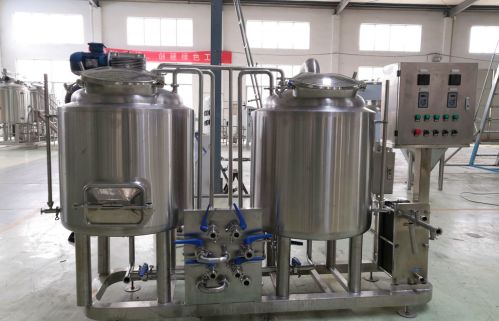
Key Components of a Steam Heated Brew House
A steam system is a closed-loop thermal circuit. Understanding the interplay between these components is critical for system design.
1. The Steam Boiler (The Generator)
The boiler is the external power plant. It heats water under pressure (typically 10-15 PSI for low-pressure systems) to generate steam.
2. Dimple Jackets (The Heat Exchanger)
Cassman Steam Heated Brew House Systems utilize high-efficiency dimple jackets (pillow plates) welded to the kettle and mash tun.
Turbulence: The dimpled design creates turbulence in the steam flow, breaking the boundary layer and significantly increasing the heat transfer coefficient compared to standard channel jackets.
Zoning: Our systems feature independent zones (bottom and side), allowing brewers to heat smaller batches without "baking on" wort on the upper sidewalls.
3. Condensate Return System
Efficiency lies in the return loop. Steam traps release condensed water (condensate) while holding back steam. This hot water is pumped back to the boiler feed tank.
![Image Suggestion: Diagram of a steam loop showing boiler, steam trap, and condensate return pump. Alt Text: Diagram of steam brewing system performance loop showing boiler and heat exchanger flow.]
Performance Metrics: Measuring Efficiency
When evaluating steam brewing system performance, look at these three critical KPIs:
1. Ramp Rate (Heating Speed)
This measures how fast the system can raise the temperature of the mash or wort.
2. Temperature Precision (PID Control)
Steam valves controlled by PID (Proportional-Integral-Derivative) loops allow for modulation.
Accuracy: Unlike direct fire, which has high thermal inertia (continues heating after shutoff), steam flow can be cut instantly. This prevents temperature overshoot during mash rests, ensuring enzymatic consistency.
3. Evaporation Rate
During the boil, you need vigorous evaporation to drive off DMS (Dimethyl Sulfide).
Standard: A steam kettle should achieve an evaporation rate of 6-8% per hour.
Design: Cassman kettles are designed with optimized jacket surface area to achieve a rolling boil even at lower steam pressures.
Comparative Analysis: Steam vs. Electric Heating
For breweries in the 5 BBL to 30 BBL range, the choice often comes down to Steam vs. Electric.
Feature | Steam Heating | Electric Heating |
Heat Transfer Mechanism | Indirect (Jackets). Large surface area. | Direct (Immersion Elements). Small surface area. |
Scorch Risk | Very Low (Gentle, even heat). | Moderate (High watt density on elements). |
Heating Speed | Fast (High BTU input). | Slower (Limited by element wattage). |
Capital Cost (CapEx) | Higher (Requires boiler & piping). | Lower (Plug and play). |
Operational Cost (OpEx) | Lower (Gas is usually cheaper than electricity). | Higher (Electricity costs can be high). |
Scalability | High (One boiler can power multiple vessels). | Low (Requires massive electrical upgrades). |
Verdict: Electric is viable for nano-breweries (<5 BBL), but for brewing efficiency at commercial scales, steam is the superior technical solution.
Conclusion
Implementing a steam system is an investment in process control. It decouples the heat source from the vessel, allowing for safer, faster, and more consistent brewing.
At Cassman, our engineering team focuses on the "Total Heat Load." We don't just sell tanks; we calculate the required surface area and steam flow rates to ensure your system hits the performance metrics your brewing schedule demands.
Need a Steam Load Calculation?
Don't guess your boiler size. Click here to contact our engineers. We will perform a technical calculation based on your brew volume and frequency to recommend the perfect steam setup.
Frequently Asked Questions (FAQ)
Q: What is the ideal steam pressure for brewing?A: For most craft breweries, 10-15 PSI (0.7-1 Bar) is ideal. This is considered "low pressure" in many jurisdictions, simplifying licensing, yet it provides a steam temperature of ~121°C, which is perfect for boiling wort without scorching.
Q: How does steam heating affect wort color?A: Steam heating is very gentle. Because the jacket surface temperature is lower than a gas flame (which can reach 1000°C+), steam prevents the Maillard reaction from running out of control, resulting in paler, cleaner-colored worts for Lagers and Pilsners.
Q: Does Cassman provide the steam piping?A: We provide the internal piping on the brewhouse skid (pre-piped). However, the connection from the boiler to the skid is usually done on-site by a local certified steam fitter to comply with local building codes.
Q: What is the maintenance requirement for steam jackets?A: The jackets themselves are maintenance-free. However, the steam boiler requires regular blow-downs to prevent scale buildup, and steam traps should be checked annually to ensure they aren't leaking live steam.


