The Economics of Cellar Management
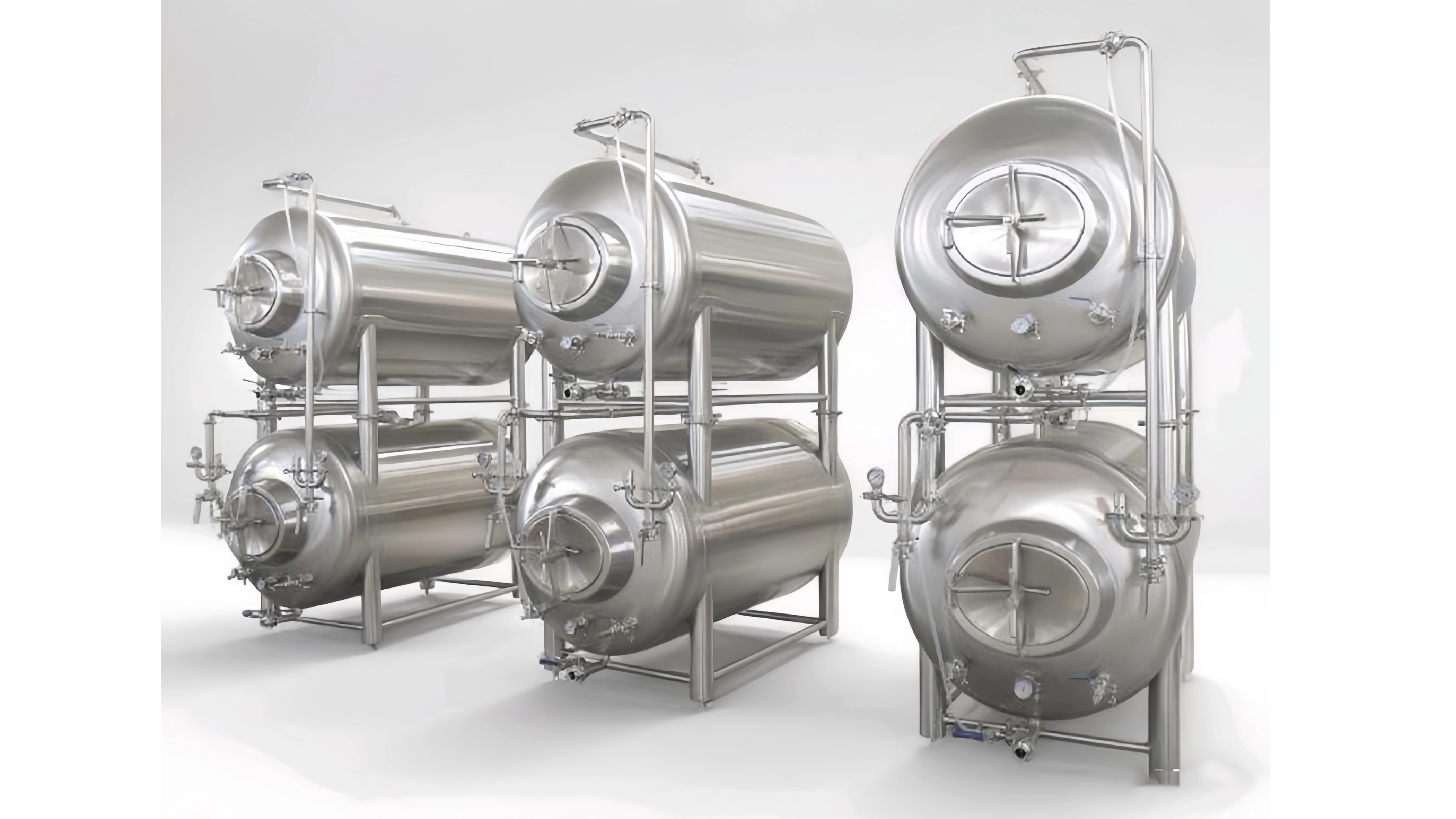
In the brewing business, stainless steel is your biggest asset, but it can also be your biggest bottleneck. For brewery owners, the decision to purchase a Brite Beer Tank (BBT) often comes down to a simple financial question: Is it worth the extra floor space and capital?
Many startups begin with "Unitanks" (using fermenters for both fermentation and carbonation) to save money upfront. However, as demand grows, this strategy often limits profitability.
In this guide, we move beyond the technical specs to perform a brewing equipment cost analysis. We will demonstrate how a Brite tank acts not just as a vessel, but as a catalyst for increasing your brewery's annual revenue.
Initial Costs vs. Long-Term Savings
To understand the Brite beer tank ROI, we must weigh the Capital Expenditure (CapEx) against the Operational Expenditure (OpEx) savings.
1. The Upfront Investment (CapEx)
Yes, buying a Brite tank involves:
The Tank Cost: The vessel itself.
Installation: Piping, glycol connections, and control integration.
Space: Occupying valuable square footage in the cellar.
2. The Hidden Savings (OpEx)
However, the absence of a Brite tank costs you money every single brew day:
Packaging Waste: Bottling or canning directly from a fermenter often leads to higher foam levels and sediment uptake. A Brite tank provides stable pressure and clear beer, reducing product loss by 2-5% per batch.
Labor Efficiency: A dedicated packaging tank allows your packaging team to work efficiently without interrupting the brewing schedule.
Calculating ROI: The "Tank Turnover" Factor
The strongest argument for investment in brewing technology like a Brite tank is the increase in Tank Turnover Rate.
The Bottleneck Scenario (Unitank Only)
If you carbonate in your fermenter, that tank is tied up for an extra 5-7 days for cooling, carbonating, and settling.
The Efficiency Scenario (With Brite Tank)
If you transfer to a Brite tank, the fermenter is freed up immediately after fermentation is done.
The Financial Impact
By saving ~6 days per batch in the fermenter, you can squeeze in 20-30% more batches per year using the same number of fermenters.
For a production brewery, the profit from those extra batches often pays for the Brite tank in less than 12 months.
Factors Influencing Cost and Value
When evaluating the market, several factors will influence your brewing equipment cost analysis:
1. Tank Sizing (The Ratio)
A common rule of thumb is a 1:1 ratio with your brewhouse size, or a 1:2 ratio if you double-batch. Buying a Brite tank that matches your maximum batch size ensures you don't bottle-neck your own production.
2. Equipment Quality
Cheap tanks can be expensive in the long run.
Cooling Jackets: Cassman’s high-efficiency dimple jackets reduce the glycol load, saving electricity.
Fittings: High-quality sanitary fittings prevent infections. One infected batch dumped due to a dirty valve can cost more than the price difference of a premium tank.
3. Resale Value
Stainless steel holds value. A well-maintained Cassman Brite Tank is an asset that can be sold if you expand or close, mitigating the risk of the initial investment.
Conclusion: The Verdict on Value
Is a Brite Beer Tank worth the investment?
If you are a nano-brewery selling everything over the counter, you might get by with Unitanks. But for any brewery distributing kegs, cans, or bottles, the Brite tank is essential for profitability.
It allows you to:
Maximize the output of your expensive fermenters.
Reduce product loss during packaging.
Ensure a consistent, professional product that builds brand loyalty.
The ROI isn't just in the dollars saved; it's in the growth capacity it unlocks for your business.
Get a Quote for Your Growth
Ready to calculate the cost for your facility? Contact Cassman today for a custom quote on Brite tanks tailored to your production goals.
Frequently Asked Questions (FAQ)
Q: How quickly will a Brite Tank pay for itself?
A: For a production brewery packaging weekly, the increased throughput (turning fermenters over faster) and reduced beer loss typically result in an ROI within 9 to 14 months.
Q: Does a Brite Tank use a lot of energy?
A: Brite tanks are very energy efficient. Since the beer enters already cold (from the fermenter crash), the Brite tank only needs to maintain the temperature, which requires minimal glycol usage compared to a fermenter that must remove heat generated by yeast.
Q: Can I buy a Brite Tank larger than my fermenters?
A: Yes. Many breweries buy a double-sized Brite tank (e.g., a 20 BBL Brite for 10 BBL fermenters) to blend two batches together for consistency before packaging.
Q: Is it cheaper to just buy another fermenter instead?
A: While the price might be similar, a Brite tank offers specific features (dished bottom, carb stones, sight glasses) that make packaging faster and safer. Buying another fermenter doesn't solve the "bottleneck" of packaging efficiency.


