The Business Case for Steam
For brewery founders and investors, selecting a brewhouse is one of the most significant capital expenditures (CapEx) in the business plan. While the allure of "plug-and-play" electric systems or cheaper direct-fire options is strong, scaling a brewery requires a long-term view.
The question isn't just "How much does it cost now?" but "How much will it cost to run for the next 10 years?"
In this financial analysis, we move beyond the stainless steel to look at the numbers. We will evaluate the steam brewing system ROI, dissect the operational savings, and explain why upgrading to steam technology is often the smartest financial move for breweries targeting growth.
Initial Costs vs. Long-Term Savings (CapEx vs. OpEx)
To understand the value of a Steam Heated Brew House System, we must distinguish between the price tag and the cost of ownership.
1. The Initial Investment (CapEx)
It is true that steam systems typically command a higher upfront cost than direct fire or electric alternatives.
Equipment Cost: Steam jackets require complex welding and pressure testing.
Infrastructure: You need to purchase a steam boiler and install rated steam piping.
Installation: Professional steam fitting is required to meet safety codes.
2. The Operational Savings (OpEx)
However, once installed, the script flips. Steam is significantly cheaper to operate day-to-day.
Energy Cost: In most regions, natural gas (fueling the boiler) is far cheaper per BTU than electricity.
Thermal Efficiency: Steam transfers heat rapidly. A shorter brew day means fewer labor hours per batch.
Maintenance: Unlike electric elements that burn out or direct fireboxes that crack from thermal stress, steam jackets are virtually indestructible with proper boiler water treatment.
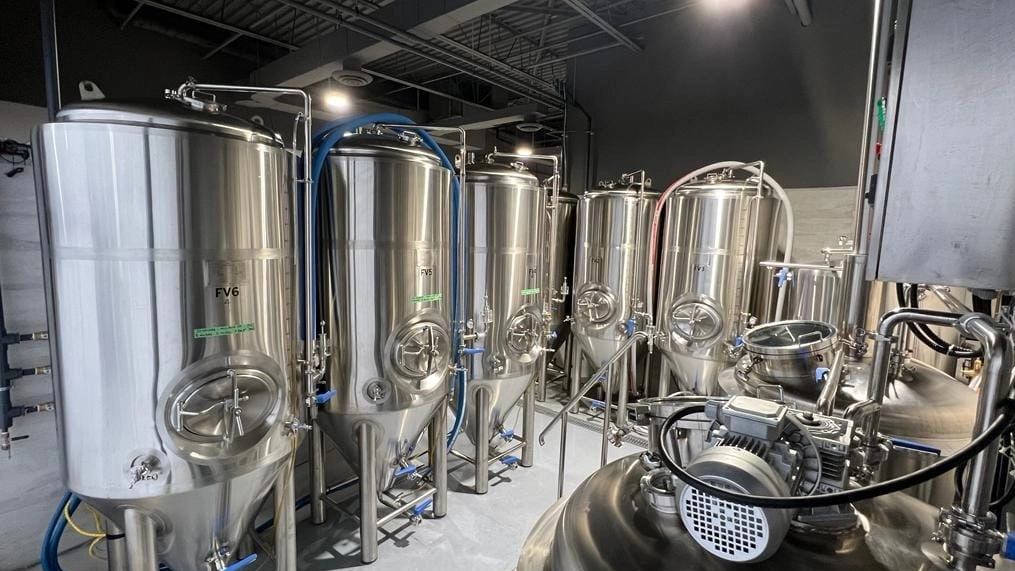
Calculating ROI: The Math Behind the Brew
How do you calculate the Return on Investment (ROI) for a steam system? You need to look at the "Efficiency Delta."
The ROI Formula for Breweries
ROI=(AnnualEnergySavings+LaborSavings−MaintenanceCosts)/InitialCostDifference×100%
Key Variables to Consider:
Utility Rates: Compare the cost of 1 Therm of Natural Gas vs. 1 kWh of Electricity in your area.
Brew Frequency: The more you brew, the faster the ROI. A system brewing 5 times a week will pay for the steam upgrade much faster than one brewing once a week.
Speed & Labor: If a steam system heats your strike water and boils your wort 30% faster, you might save 1-2 labor hours per brew day. Over a year, that is thousands of dollars in wages saved.
Example Scenario (10 BBL System)
Electric System: Lower upfront cost, but $80/brew in electricity.
Steam System: Higher upfront cost, but $25/brew in gas.
Result: If you brew 200 times a year, steam saves you $11,000 annually in fuel alone, not counting labor savings.
Factors Influencing Cost and Value
Not all steam systems are created equal. Several factors influence your brewing equipment cost analysis:
1. System Sizing and Scalability
A major advantage of steam is scalability. A single boiler can power a 10 BBL brewhouse today and a 30 BBL expansion tomorrow. You don't need to buy new heating elements or burners; you simply pipe steam to the new vessels.
2. Automation Level
Cassman offers various levels of control, from manual steam valves to fully automated pneumatic valves linked to a PLC. While automation increases the initial price, it ensures consistency and frees up the brewer for other tasks, further improving ROI.
3. Equipment Quality
Investing in high-quality dimple jackets (like those found on Cassman tanks) ensures maximum heat transfer efficiency. Cheaper, poorly designed jackets waste steam, eroding your ROI.
Explore Options: View our range of Steam Heated Systems to see different configurations suitable for your budget.
Conclusion: The Verdict on Value
Is a steam heated brew house worth the investment?
For nano-breweries (<3 BBL) with limited space, electric might be the right choice. However, for any commercial production brewery (5 BBL to 100 BBL), steam is the clear winner for long-term profitability.
The initial "sticker shock" is quickly offset by lower utility bills, faster production times, and the ability to scale your operation without reinventing your heating infrastructure. Investing in steam is investing in the future stability of your business.
Get a Custom ROI Assessment
Unsure if steam fits your budget? Contact Cassman today. Our team can help you estimate the total cost of ownership based on your local utility rates and production goals.
Frequently Asked Questions (FAQ)
Q: How long does it typically take to see an ROI on a steam system?
A: For a standard 10-15 BBL brewery brewing 3-4 times a week, the energy and labor savings usually offset the higher initial installation cost within 18 to 24 months. After that point, the savings are pure profit.
Q: Does a steam system increase the resale value of my brewery?
A: Yes. Steam systems are the industry standard for professional brewing. If you ever decide to sell your equipment or business, a steam-powered brewhouse retains its value much better than direct-fire or electric systems, which are often viewed as "starter" equipment.
Q: What are the hidden costs of steam systems?
A: The main ongoing cost is boiler maintenance. You will need a water treatment plan (chemicals to prevent scale) and annual boiler inspections. However, these costs are generally lower than the electricity premiums paid for electric heating.
Q: Can I retrofit my existing brewery to steam?
A: It is possible but expensive to retrofit tanks that weren't built for steam pressure. It is usually more cost-effective to purchase a dedicated Steam Heated Brew House designed with proper pressure-rated jackets from the start.


