The Electric Revolution in Craft Brewing
In the rapidly evolving world of craft beer, precision is power. While traditional steam and direct-fire systems have long dominated the industry, a quiet revolution is taking place in taprooms and microbreweries worldwide: the rise of the Electric Brewhouse.
For startup breweries and brewpubs where space is at a premium and consistency is king, electric systems offer a streamlined solution. But what exactly makes them different?
In this guide, we explore the mechanics of electric brewing, its distinct advantages over gas and steam, and how Cassman’s Factory Direct Electric Brewhouses are helping brewers achieve commercial quality with compact efficiency.
Definition: What is an Electric Brewhouse?
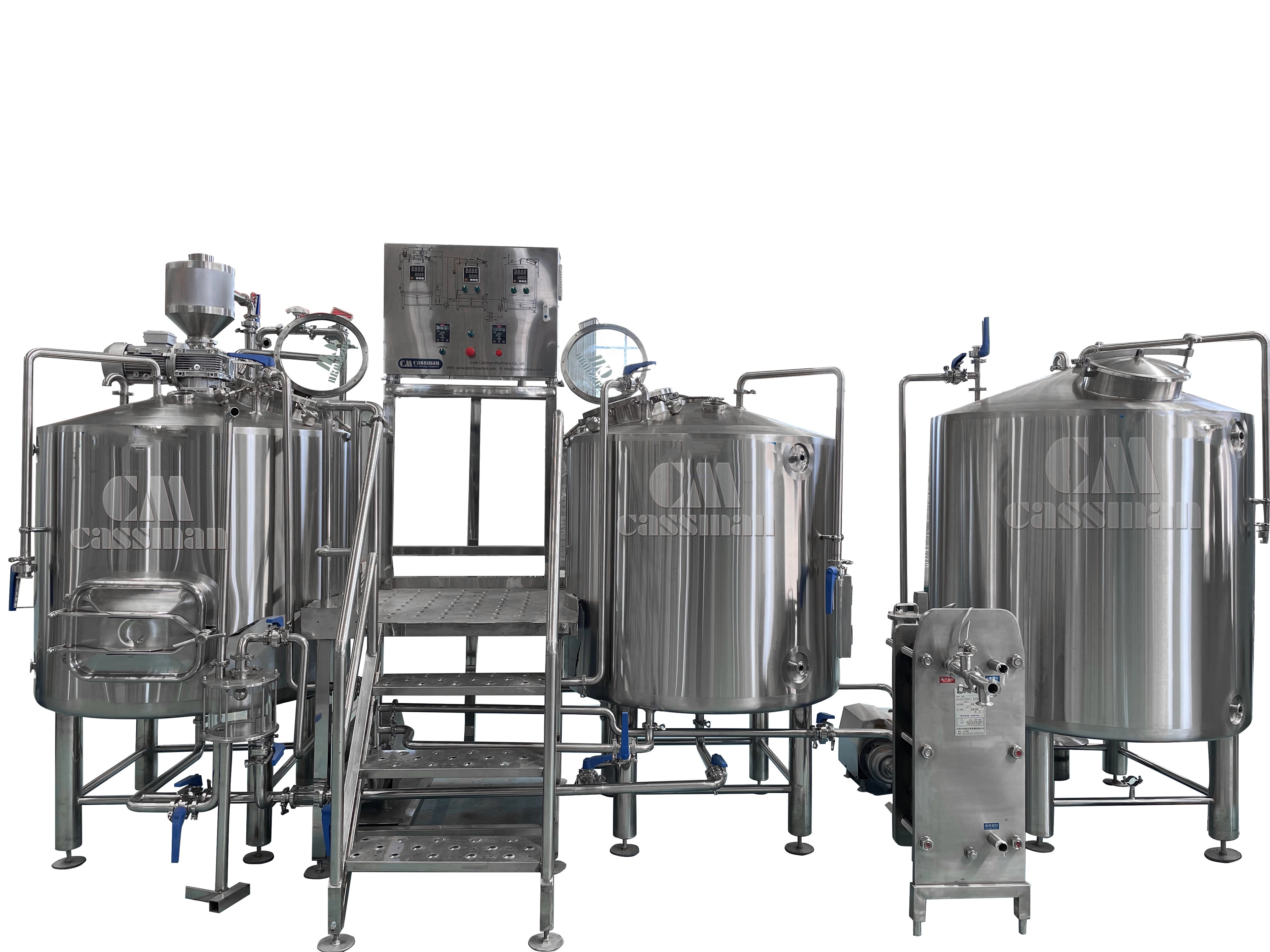
An Electric Brewhouse is a brewing system that utilizes electric resistance heating elements to heat water and boil wort, rather than relying on a gas burner or an external steam boiler.
Unlike steam systems that require complex piping and separate boiler rooms, or direct-fire systems that use open flames, an electric system is self-contained. The heating elements are installed directly inside the Mash Tun, Kettle, and Hot Liquor Tank (HLT), transferring energy directly to the liquid.
Key Components include:
Immersion Heating Elements: Low-watt density elements designed to heat wort gently without scorching.
Control Panel: Usually equipped with PID (Proportional-Integral-Derivative) controllers for precise temperature management.
Vessels: Stainless steel tanks (2-vessel, 3-vessel, or 4-vessel configurations) specifically ported for electric power.
How Electric Brewing Works
The principle behind electric brewing is Direct Energy Transfer.
Heating: When the system is activated, electricity flows through the stainless steel heating elements submerged in the liquid.
Circulation: To prevent "hot spots" or scorching (caramelization) of the wort near the elements, an electric brewhouse relies on continuous recirculation. A sanitary pump moves the wort or water, ensuring even heat distribution.
Control: The brewer sets a target temperature on the digital control panel. Sensors inside the tank provide real-time feedback, and the system automatically pulses power to the elements to maintain the temperature within 0.1°C accuracy.
Note: Modern systems, like those from Cassman, use "Low Watt Density" elements. This means the heat is spread over a larger surface area, preventing the sugar in the wort from burning onto the element.
Advantages of Electric Brewhouses
Why are more brewers choosing electric? Here are the three main drivers.
1. Unmatched Temperature Precision
In brewing, temperature control is the difference between a dry Saison and a sweet mess. Electric systems, controlled by PIDs or PLCs, hold mash temperatures with incredible accuracy. This allows for highly repeatable recipes—essential for building a loyal customer base.
2. Energy Efficiency (99% Transfer)
Gas burners lose a significant amount of heat to the surrounding air (often 40-50% loss). Electric elements are submerged directly in the fluid, meaning nearly 100% of the energy you pay for goes into heating your beer. This makes electric brewing highly efficient for smaller batch sizes (3BBL to 10BBL).
3. Simplified Installation & Safety
No Boiler Room: You save massive capital expenditure by not needing a steam boiler, steam piping, or boiler certification.
No Flues: Unlike gas, electric systems produce no carbon monoxide, eliminating the need for expensive venting and chimneys. This makes them perfect for basements, historic buildings, or urban taprooms with strict zoning laws.
The "Factory Direct" Advantage with Cassman
When investing in an electric system, the source matters. Many suppliers are simply re-sellers who add a markup.
At Cassman, we are the manufacturer. Choosing a Factory Direct Electric Brewhouse means:
Cost Savings: You bypass the middleman, getting premium equipment at a competitive price.
Customization: Need 3-phase power at a specific voltage? Need the manifold on the left instead of the right? We build it to your specs.
Direct Support: You talk to the people who built your machine, not a sales rep who has never held a tri-clamp.
Conclusion
An Electric Brewhouse is more than just a vessel; it is a modern tool for precision craftsmanship. For brewpubs and microbreweries focusing on quality and consistency without the headache of steam infrastructure, electric is the logical choice.
By understanding the mechanics and benefits, you can decide if this technology fits your business model. And when you are ready to build, going Factory Direct ensures you start your brewing journey with the best possible value.
Ready to Electrify Your Brewery?
Explore our range of high-efficiency systems. View Cassman’s Electric Brewhouse Models and contact us for a factory-direct quote today.
Frequently Asked Questions (FAQ)
Q: Does electric brewing scorch the wort?
A: Not if designed correctly. High-quality systems like Cassman’s use Ultra-Low Watt Density elements. This spreads the heat out gently. Combined with proper wort circulation, scorching is effectively eliminated.
Q: What size brewery is best for electric heating?
A: Electric systems are ideal for sizes ranging from 1 BBL to 10 BBL. Above 15-20 BBL, the electrical amperage requirements become very high, and steam heating often becomes more economical.
Q: Is an electric brewhouse cheaper to install?
A: Generally, yes. While the electrical upgrades to your building might cost money, you save significantly by avoiding the purchase of a steam boiler, steam piping, and complex gas venting systems.


