Introduction: The "Goldilocks" Problem of Brewery Expansion
Scaling up your brewery is a sign of success, but it comes with a critical logistical challenge: sizing your new cellar vessels.
It is the classic "Goldilocks" problem. If you buy tanks that are too small, you will constantly struggle to keep up with demand, creating production bottlenecks. If you buy tanks that are too big, you waste capital on stainless steel that sits empty and occupy valuable floor space.
In this guide, we will walk you through the math of calculating brewery capacity, helping you choose the perfect fermenter size for your current needs and future growth.
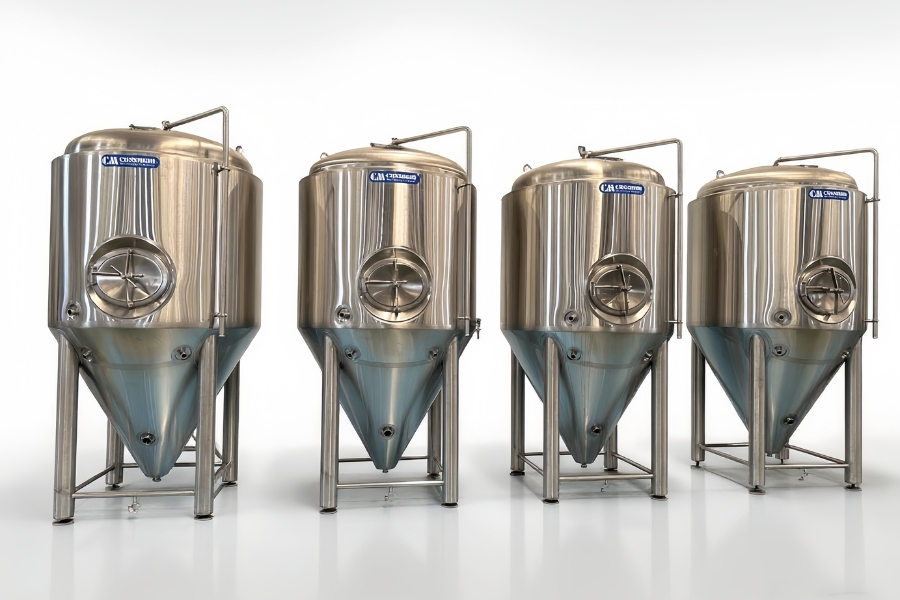
Understanding "Headspace": Total vs. Effective Volume
When browsing brewery fermenter sizing charts, you will often see two different volume numbers. Understanding the difference is crucial.
Why Tanks Are Bigger Than They Seem
Fermentation is a vigorous process. As yeast consumes sugars, it produces CO2 and creates a foamy layer on top of the beer known as "krausen." If a tank were filled to the very top with wort, the krausen would explode out of the pressure relief valve or blow-off arm, causing a mess and potential contamination.
The 20-25% Rule
To prevent this, professional fermenters are designed with headspace.
Effective Volume: The amount of beer the tank is designed to hold (e.g., 10 BBL).
Total Volume: The actual internal volume, which is typically 20% to 25% larger than the effective volume.
At Cassman, when you order a 10 BBL Beer Fermenter, you are getting a vessel with enough total volume to safely ferment a full 10 BBL batch without overflow. You don't need to do the math—we have already built the safety margin in.
Matching Brewhouse to Cellar: The Strategy of Batching
Your fermenter size should be a logical multiple of your brewhouse output. Here are the two most common strategies:
1. The 1:1 Ratio (Single Batching)
2. The 1:2 Ratio (Double Batching)
Pro Tip: If you are debating between 10 bbl vs 20 bbl tanks, the 20 BBL option (double batching) usually offers a better Return on Investment (ROI) for core flagship beers.
Key Dimensions to Check Before You Buy
You have calculated the volume, but will the tank fit in your building? Before placing an order, check these three physical constraints.
1. Ceiling Height & Tipping Height
It is not enough for the tank to just "stand up" under the ceiling. You need to account for:
Tipping Height: The diagonal height of the tank when it is being lifted from horizontal to vertical. This is always higher than the standing height.
Top Clearance: Space for piping, dry hopping access, and PRVs (Pressure Relief Valves).
2. Doorways and Width
Can the tank fit through your facility's doors? Standard tanks can be wide.
3. The Cassman Solution: Custom Aspect Ratios
If your space is tight, standard dimensions might not work. This is where Cassman's customization shines.
Slim Tanks: We can design taller, narrower tanks for buildings with high ceilings but limited floor space.
Wide Tanks: We can design shorter, wider tanks for basements or low-ceiling facilities.
Browse our tank specifications: See the standard dimensions for our Beer Fermenters here to start your planning.
Future-Proofing: Don't Forget the Chiller
Adding more fermentation capacity means adding more heat load.
When you add new tanks, ensure your Glycol Chiller can handle the extra work. If you are planning a major expansion, we recommend oversizing your main glycol trunk lines now so you can easily "plug and play" new tanks later without re-plumbing your entire cellar.
Conclusion
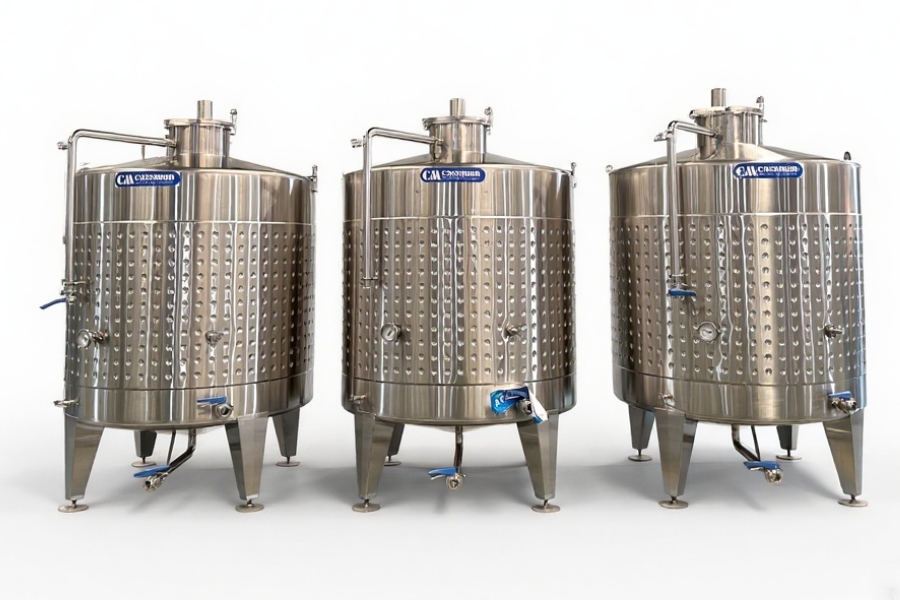
Sizing your fermenters correctly is a balance of brewing strategy (single vs. double batching) and physical reality (ceiling height and floor space). By planning ahead, you ensure your brewery runs efficiently and profitably.
Not sure if your brewery can fit a larger tank?
Don't risk ordering a tank that doesn't fit. Click here to let our engineers create a FREE 3D floor plan design for your facility, ensuring every inch of space is optimized.
Frequently Asked Questions (FAQ)
Q: Can I put a half batch (e.g., 10 BBL) in a 20 BBL fermenter?A: Yes, but be careful. The cooling jackets on a 20 BBL tank are positioned for a full batch. If the tank is only half full, the upper cooling zones won't touch the beer, which can make temperature control difficult. Also, excessive headspace can lead to oxidation issues if not purged correctly.
Q: How much space should I leave between tanks?A: We recommend leaving at least 18-24 inches (45-60 cm) between tanks. This allows enough room for a brewer to walk between them for cleaning, checking samples, and accessing valves safely.
Q: What is the difference between Gross Capacity and Net Capacity?A: Gross Capacity is the total volume of the tank shell. Net Capacity (or Effective Capacity) is the volume of beer the tank is rated to hold safely while leaving room for fermentation foam. Always buy based on Net Capacity.
Q: Does Cassman provide drawings before manufacturing?A: Yes. We provide detailed CAD drawings for every tank, showing all port locations and exact dimensions, for your approval before production begins.


