How Much Does a 500L Craft Brewery Cost in 2025?
A Realistic CAPEX/OPEX Breakdown, Payback Scenarios & Risk Controls for Investors and Founders
Who This Guide Is For
If you’re searching “How much does it cost to invest in a 500L craft brewery?”, you’re likely:
An investor evaluating total capital, payback timing, and sensitivity to volume or margin shifts.
A small business owner or aspiring brewer mapping a realistic budget, cash runway, and vendor shortlist—without getting blindsided by compliance or installation overruns.
This guide cuts through marketing fluff. We use real 2025 quotes, field-tested build scenarios, and lessons from breweries that launched (and some that didn’t). All numbers are based on professional-grade setups—not garage experiments.
1. What “500L Brewery” Actually Means (Scope Matters)
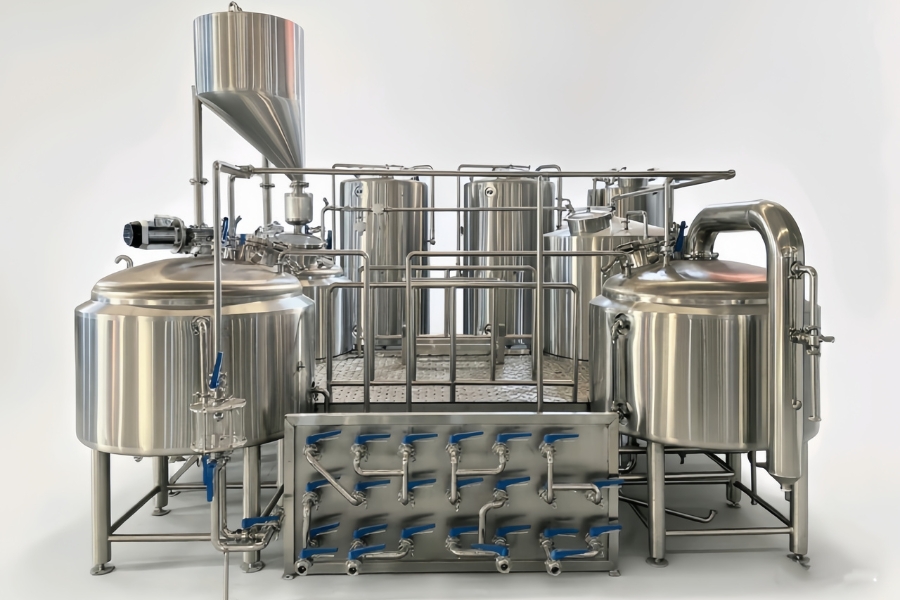
“500L” refers to batch size, not annual capacity. A typical commercial 500L system includes:
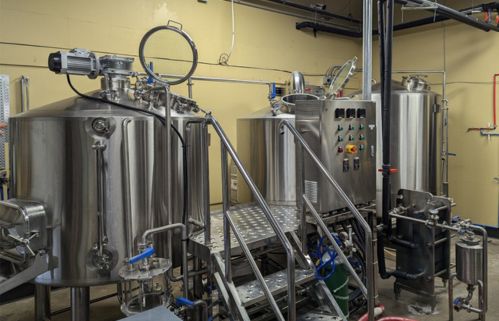
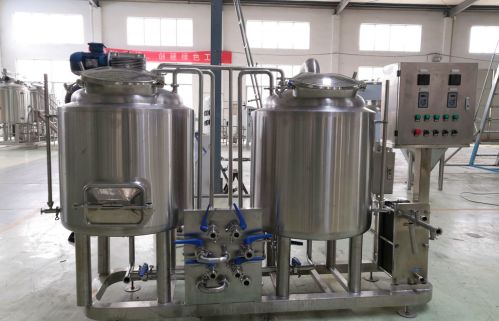
2- or 3-vessel brewhouse (mash, lauter, boil/whirlpool)
3,000–5,000L total fermentation capacity (6–10× batch size)
Glycol chilling, hot water tank, CIP (Clean-in-Place) system
Basic lab: pH, DO/CO₂, gravity tools
Cold room for finished product
Draft-first packaging (kegs), with canning added later if needed
This scale supports a taproom-first model or local wholesale (within 50-mile radius). It’s not built for national distribution—but it is built for profitability if managed well.
2. CAPEX Breakdown: What You’ll Actually Spend (2025 USD)
Key Insight: Equipment is only ~60% of your total CAPEX. Installation, buildout, and compliance often eat the rest.
Category | Cost Range (USD) | What Drives Variance |
Brewhouse (500L, semi-auto) | $35,000–$75,000 | Vessel count, steam vs. electric, control automation, stainless grade |
Fermentation + Brite Tanks (3,000–5,000L) | $25,000–$60,000 | 304 vs. 316L steel, pressure rating, insulation, port configuration |
Glycol Chiller + Manifolds | $8,000–$20,000 | Cooling load, redundancy, brand (e.g., G&D vs. local OEM) |
Hot Water / Heat Recovery | $4,000–$12,000 | — |
Steam Boiler or Electric Heaters | $8,000–$25,000 | Steam requires venting, permits, and safety interlocks |
CIP System (2–3 tank skid) | $4,000–$12,000 | Pump quality, automation level, chemical handling |
Packaging |
|
|
– Keg washer/filler (semi-auto) | $6,000–$18,000 | — |
– Entry canning line (2–5 heads + DO control) | $25,000–$80,000 | Oxygen control is non-negotiable for shelf life |
Cold Room (walk-in, 10–20 m²) | $8,000–$25,000 | Prefab vs. custom build, insulation thickness |
Lab & QA Equipment | $5,000–$20,000 | DO meter alone: $2,000–$6,000 |
Installation & Commissioning | 15–25% of equipment subtotal | Piping, controls integration, FAT/SAT testing |
Facility Buildout (TI) | $15,000–$60,000 | Floor drains, epoxy, electrical/gas upgrades, ventilation |
Permits, HACCP, Compliance Setup | $3,000–$15,000 | Includes process flow diagrams, SSOPs, safety plans |
Contingency (10–15%) | — | Covers freight spikes, scope creep, lead-time delays |
Total CAPEX Ranges (Excluding Real Estate)
Draft-only (taproom focus): $130,000–$200,000
With basic canning from Day 1: $170,000–$300,000
High-spec, automation-ready: $250,000–$380,000
Reality Check: Many first-time founders underestimate installation and buildout by 30–50%. Always get fixed-scope quotes from rigging contractors.
3. Monthly Operating Costs (OPEX): The Cash Flow Trap
Your first 6 months will test your runway. Here’s a realistic monthly burn:
Category | Estimated Monthly Cost (USD) |
Rent (150–400 m² light industrial) | $1,500–$5,000 (varies by city) |
Utilities (power, water, gas, CO₂, glycol) | $800–$2,500 |
Ingredients (malt, hops, yeast) | $1.20–$1.80/L packaged |
Packaging (kegs/cans, labels, boxes) | $0.30–$0.90/L (cans cost 2–3× kegs) |
Labor (1 brewer + part-time help) | $4,000–$8,000 |
Consumables (chemicals, gaskets, filters) | $300–$800 |
Compliance (wastewater, calibration, insurance) | $500–$1,200 |
Marketing & Sales (events, POS, promo) | $500–$2,000 |
Working Capital Recommendation: Hold 3–6 months of OPEX in reserve. For most 500L taprooms, that’s $25,000–$70,000.
4. New vs. Used Equipment: Where to Save (and Where Not To)
Safe to Buy Used:
Fermenters & brite tanks (if pressure- and jacket-tested)
Kegs, heat exchangers, racking pumps
Cold room panels (if undamaged)
Buy New:
Brewhouse control panels (safety-critical)
Canning lines (DO control fails if seals/wear are off-spec)
Glycol chillers (efficiency drops with age)
Safety systems (CO₂ monitors, pressure relief)
Due Diligence Tip: Require a FAT (Factory Acceptance Test) video for used tanks. Check weld integrity, valve actuation, and spare parts availability.
5. Compliance Isn’t Optional—It’s Built Into Your Budget
You’ll need:
HACCP Plan with CCPs (Critical Control Points)
SSOPs (Sanitation Standard Operating Procedures)
Allergen control & lot traceability
One-way workflow (raw → finished, no cross-traffic)
Chemical storage, eyewash stations, pressure vessel certs
Budget $3,000–$10,000 for documentation, audits, and training. In the U.S., expect TTB, state alcohol board, and health department reviews. In the EU, HACCP + local food safety authority sign-off.
6. Three Realistic Build Scenarios (2025)
Scenario | Focus | Packaging | CAPEX | Best For |
Lean Taproom | 2-vessel, minimal automation | Kegs only | $130k–$200k | Founders with tight budgets; fastest launch |
Balanced Growth | 3-vessel, better controls, 4,000L CCTs | Kegs + basic canning | $180k–$300k | Hybrid taproom/wholesale; room to scale |
Automation-Ready | PLC controls, full utility redundancy | Quality canning line | $250k–$380k | Investors targeting faster payback at volume |
Pro Advice: Start draft-only. Add canning once you’ve proven repeat demand and nailed DO control (<50 ppb).
7. Unit Economics & Payback: The Real Numbers
Assumptions:
Net yield per batch: 440–470L (after trub, losses)
COGM (Cost of Goods Manufactured): $1.20–$1.80/L (draft)
Taproom revenue: $4–$8/L (3–5× COGM)
Wholesale keg margin: 30–45% gross
Cans: +$0.50–$0.80/L packaging cost
Throughput & Payback
Monthly Batches | Annual Output | Payback Estimate |
8 batches | ~43,000L | Taproom-heavy: 18–30 months |
12 batches | ~65,000L | Wholesale + cans: 24–48 months |
Biggest Levers:
Loss rate (keep <10%)
DO control (reduces returns/spoilage)
Labor efficiency (1 brewer should handle 10–12 batches/month)
Channel mix (taproom = higher margin, lower volume risk)
8. Realistic Timeline: 6–9 Months from Concept to Tap
Months 1–2: Business model, site selection, budget lock, vendor RFPs
Months 2–3: Lease signed, floor plan approved, equipment PO issued
Months 3–5: Buildout (drains, power, gas), SOPs drafted, supplier onboarding
Months 5–6: Equipment delivery, installation, FAT/SAT, staff hired
Months 6–7: Pilot batches, stability testing, soft launch
Months 7–9: Grand opening, KPI tracking (yield, COGS, pour cost)
Warning: Permitting can take 60–120 days alone. Start early.
9. Hidden Risks & How to Control Them
Risk | Mitigation |
Lead-time delays | Use milestone payments; include liquidated damages in contracts |
Installation creep | Fixed-scope quote for piping/rigging; pre-mark utility tie-ins |
Quality drift | Weekly DO/CO₂ tests, retention samples, CAPA process |
Cash crunch | 13-week rolling cash forecast; buy tanks before brewhouse upgrade |
Final Takeaways
CAPEX ranges from $130k (draft-only) to $380k (canning-ready)—but installation and buildout often surprise newcomers.
Start with kegs. Canning adds cost, complexity, and oxygen risk unless you’re ready.
Hold 3–6 months of OPEX in reserve. Your first 6 months will burn cash faster than projected.
Compliance is baked into cost—don’t treat it as an afterthought.
Payback is achievable in 18–36 months—but only with tight loss control, strong taproom margins, and realistic volume assumptions.
FAQs
Q: Is 500L too small to be profitable?
A: Not if you focus on taproom sales and keep losses under 10%. Wholesale-only is rarely viable at this scale.
Q: What’s the biggest hidden cost?
A: Facility retrofits (floor drains, gas lines) and installation labor—often 20–25% of equipment cost.
Q: Should I can from Day 1?
A: Only if you have committed distributors and a validated DO control process. Otherwise, start with kegs.
Need a Custom Budget?
Share your location, target batch frequency, draft vs. can mix, and max CAPEX—and we’ll send a line-item budget, vendor shortlist, and 6-month cash flow forecast.


