The Heart of Your Brewery
In commercial brewing, the quality of your beer is only as good as the vessel it ferments in. For new brewery owners and expanding facilities alike, one of the most common technical questions we encounter is: "What is the actual difference between a Unitank and a standard fermenter?"
While they may look identical from the outside—both featuring the iconic cylindrical-conical shape—their internal capabilities and operational roles differ significantly. Choosing the wrong type can lead to production bottlenecks or unnecessary equipment costs.
In this guide, we will explore the technical nuances of Unitank vs. Conical fermenter setups, helping you decide which vessel aligns with your brewing goals and floor plan.
What is a Standard Conical Fermenter?
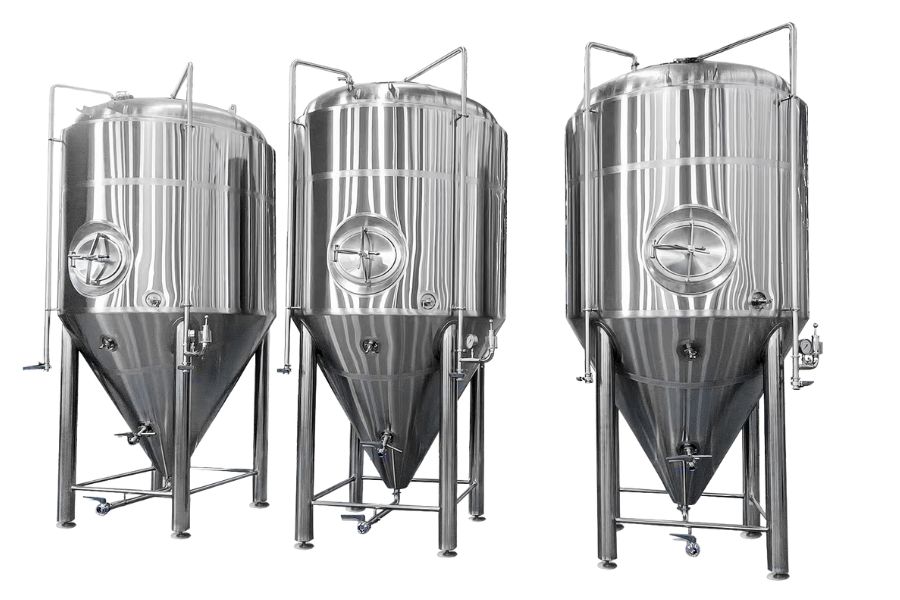
A standard conical fermenter is the workhorse of the brewing industry, designed primarily for the fermentation phase.
Key Characteristics
Cone Bottom: Typically a 60-degree cone that allows yeast and sediment (trub) to settle at the bottom for easy removal (harvesting) without exposing the beer to oxygen.
Pressure Rating: Standard fermenters are designed to hold low pressure (usually just enough for hydrostatic pressure and CO2 blow-off). They are not typically rated for the higher pressures required for force carbonation.
The Workflow: Once primary fermentation is complete and the yeast is harvested, the beer is usually transferred to a Brite Beer Tank (BBT) for clarification, maturation, and carbonation.
Best For: Breweries that prioritize high throughput and have a dedicated cellar workflow involving separate Brite tanks.
What is a Unitank? (The All-in-One Solution)
A Unitank (short for Universal Tank) is a dual-purpose vessel that combines the features of a fermenter and a Brite tank into one single unit. It is the "Swiss Army Knife" of brewery tank types.
The Critical Differences
Pressure Capability: The defining feature of a Unitank is its ability to hold higher pressure (typically 15 PSI to 30 PSI). This allows brewers to naturally carbonate the beer (spunding) or force carbonate it directly in the tank.
Carbonation Stone: Unlike standard fermenters, a Unitank comes equipped with a dedicated port for a carbonation stone (carb stone). This porous stone diffuses CO2 into the beer efficiently.
Complete Process: You can ferment, crash cool, age, clarify, and carbonate all in the same vessel. You can even package (keg or can) directly from the Unitank.
At Cassman, our Unitanks are rigorously pressure-tested and CE-certified to ensure safety during these high-pressure operations.
Explore our range of tanks: Check out our full specifications for Beer Fermenters and Unitanks here.
Pros and Cons Breakdown
To help you visualize the difference between unitank and fermenter setups, here is a direct comparison:
Feature | Standard Conical Fermenter | Unitank (All-in-One) |
Primary Function | Fermentation only. | Fermentation, Aging, Carbonation. |
Pressure Rating | Low / Atmospheric. | High (Rated for Carbonation). |
Equipment Cost | Lower per tank. | Higher per tank (due to reinforcement & fittings). |
Space Efficiency | Requires space for separate Brite Tanks. | Excellent (saves floor space). |
Oxidation Risk | Higher (requires transfer to BBT). | Lowest (single vessel process). |
Turnover Speed | Fast (frees up tank for next batch quickly). | Slower (beer occupies tank until packaging). |
Making the Choice: Which Should You Buy?
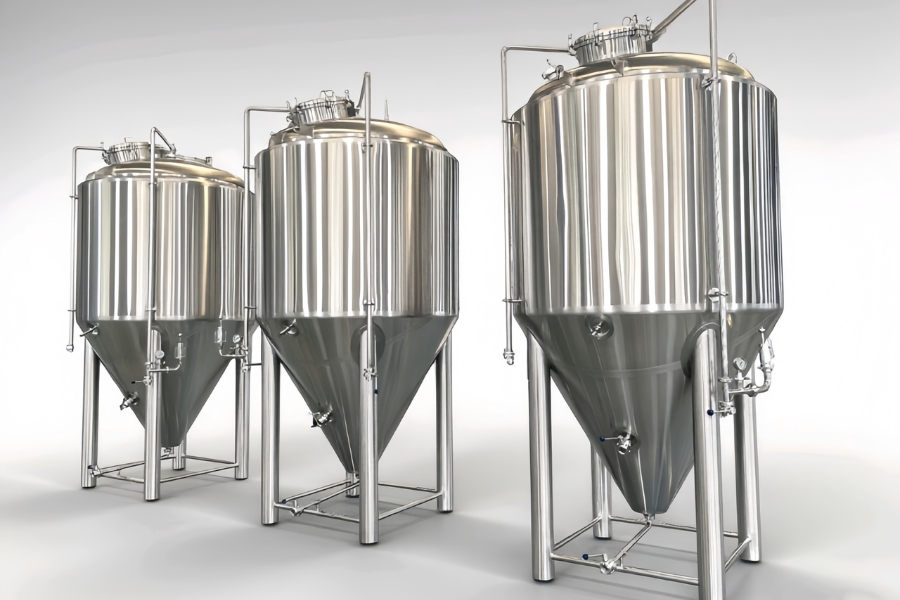
The decision usually comes down to your business model and available space.
1. The Brewpub or Microbrewery (Space-Constrained)
Recommendation: Unitanks.If you are running a brewpub where square footage is expensive, Unitanks are ideal. They eliminate the need for Brite tanks, saving valuable floor space. Furthermore, because you don't need to transfer beer between tanks, you reduce the risk of oxidation and infection—critical for maintaining quality in smaller batches.
2. The Production Brewery (Volume-Focused)
Recommendation: Standard Fermenters + Brite Tanks.For larger facilities, efficiency is key. A Unitank ties up your fermentation vessel for the entire duration of carbonation and packaging. By using standard fermenters, you can transfer the beer to a Brite tank as soon as fermentation is done, immediately freeing up the fermenter for the next brew. This maximizes your annual production capacity.
Conclusion
Whether you choose the versatility of a Unitank or the specialized efficiency of a standard conical fermenter, quality manufacturing is non-negotiable. Tanks must be sanitary, easy to clean, and safe under pressure.
At Cassman, we provide both solutions. Our tanks feature top-tier stainless steel construction, precise temperature control jackets, and full CE certification to meet global safety standards.
Not sure if your floor plan fits a Unitank setup?
Don't guess with your brewery layout. Click here to contact our engineering team, and we will provide a free 3D layout design tailored to your building's dimensions and production goals.
Frequently Asked Questions (FAQ)
Q: Can I use a standard fermenter as a Unitank?A: Generally, no. Standard fermenters are not built to withstand the pressure required for carbonation. Attempting to pressurize a non-rated tank can be dangerous and cause tank failure. Always check the pressure rating.
Q: Do I need a Brite tank if I have Unitanks?A: No, a Brite tank is not strictly necessary if you have Unitanks, as you can carbonate and package directly from the Unitank. However, some brewers still keep one Brite tank for bottling logistics or blending.
Q: Why are Unitanks more expensive?A: Unitanks require thicker steel, stronger welds, and more complex fittings (like carbonation stone ports and pressure relief valves) to safely handle higher internal pressures, which increases manufacturing costs.
Q: How do I size my fermenters?A: A general rule is to size your fermenters to match your brewhouse size (1:1) or double it (2:1) for double-batching. For a precise calculation based on your weekly output, visit our Beer Fermenter product page.


