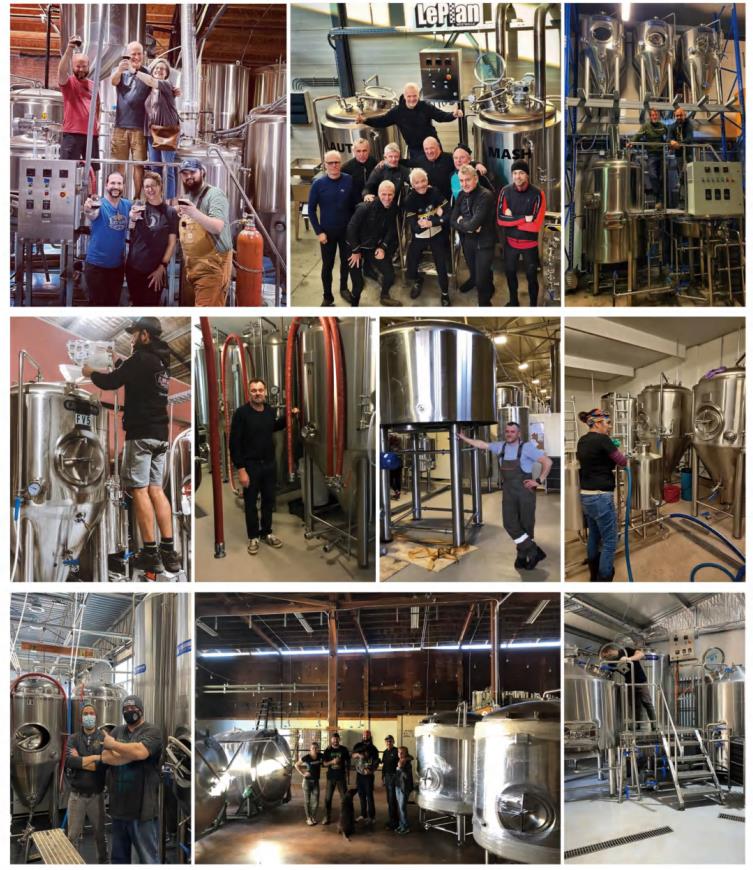
A shiny new brewhouse is the pride of any brewery, but keeping it shiny—and functional—requires a disciplined approach. Unlike steam systems which rely on external boilers, an Electric Brewhouse has its power source directly inside the vessel. This design offers incredible efficiency, but it also demands specific operational habits to ensure longevity.
Whether you are a startup brewer or a production veteran, understanding the nuances of your equipment is key to consistent beer production.
In this guide, we cover the best practices for operating and maintaining your Cassman Electric Brewhouse, ensuring that your investment continues to perform at peak efficiency for years to come.
Operating Your Electric Brewhouse: The "Golden Rules"
Operating an electric system is straightforward, but there are three critical rules that every brewer must memorize to prevent damage.
1. The "No Liquid, No Power" Rule (Preventing Dry Firing)
This is the most critical rule in electric brewing.
The Risk: Electric heating elements are designed to dissipate heat into liquid. If you turn them on while they are exposed to air ("Dry Firing"), they will overheat and fail within seconds.
The Best Practice: Always visually confirm that the elements are fully submerged before engaging the power. Cassman systems include safety interlocks, but human vigilance is the best fail-safe.
2. Managing Flow and Circulation
To prevent scorching (caramelization) of the wort, the liquid must move.
The Process: During the mash and the boil ramp-up, ensure your sanitary pump is running. This creates a flow across the heating elements, stripping away the heat and distributing it evenly throughout the tank.
Tip: Don't run the pump too fast during the mash to avoid a "stuck mash," but keep it moving enough to ensure temperature homogeneity.
3. PID Tuning and Temperature Ramps
Modern electric systems use PID Controllers to manage heat.
Auto-Tune: When you first install your system, run an "Auto-Tune" cycle with water. This teaches the controller how fast your specific volume heats up and cools down, preventing temperature overshoots during your mash rests.
Maintenance Best Practices: Keeping it Clean
A clean brewery is a profitable brewery. Electric elements require a specific cleaning regimen that differs from standard tank cleaning.
1. Cleaning the Heating Elements (CIP)
Over time, wort proteins and calcium oxalate (beer stone) can build up on the heating elements. This acts as insulation, forcing the element to work harder and eventually causing failure.
Routine: After every brew day, perform a standard CIP (Clean-In-Place) cycle using hot caustic soda or an alkaline brewery cleaner.
Deep Clean: Once a month, inspect the elements. If you see a white, chalky buildup, perform an acid cycle (using nitric or phosphoric acid blends) to dissolve the mineral deposits.
2. Inspecting Seals and Gaskets
Electric elements are typically mounted via Tri-Clamp or threaded fittings.
Check: Inspect the silicone or EPDM gaskets around the element ports regularly. Heat cycles can cause these to compress over time. Replacing a $2 gasket is much cheaper than losing a batch of beer to a leak.
3. The "Factory Direct" Spare Parts Advantage
Maintenance is easier when you have the right support.
The Issue: If an element fails on a generic system, you might wait weeks for a reseller to source a part.
The Cassman Solution: Buying a Factory Direct Electric Brewhouse means you have a direct line to the manufacturer. We recommend keeping a "Critical Spares Kit" on hand (1 spare element, 1 set of gaskets, 1 temp sensor). If you need more, we ship directly from the factory, saving you time and money.
Common Issues and Troubleshooting
Even the best systems encounter hiccups. Here is how to solve common electric brewing issues.
Symptom
Potential Cause
Solution
Slow Heating
One element may be "dead"
Check the amperage draw on your panel. If one phase is low, replace the faulty element.
Scorched Wort
Flow rate too low
Increase pump speed during heating. Ensure elements are clean before brewing.
Temp Fluctuates
PID not tuned
Run the PID "Auto-Tune" function. Check if the temperature sensor is coated in soil.
Breaker Trips
Short circuit or moisture
Check for moisture inside the element's terminal wiring box. Ensure all connections are tight.
Conclusion
An Electric Brewhouse is a robust, reliable workhorse for the modern brewery—provided it is treated with respect. By following simple protocols like preventing dry firing and regular acid cleaning, your system will deliver precise temperatures and high efficiency for decades.
At Cassman, we don't just sell tanks; we support the brewers who use them. Our Factory Direct model ensures that whether you need technical advice or a replacement part, the solution is just one call away.
Q: How often should I replace my heating elements?
A: There is no set expiration date. With proper cleaning and no dry-firing, high-quality Low Watt Density elements can last 5-10 years. We recommend keeping one spare on the shelf just in case.
Q: Can I use a pressure washer on the control panel?
A: No! While our panels are rated for brewery environments (often IP65), high-pressure water can force its way into seals. Wipe down control panels with a damp cloth and mild sanitizer only.
Q: My element has a black crust on it. How do I remove it?
A: This is scorched organic material. Do not scrape it with steel wool, as this damages the stainless steel passivation layer. Soak it in a hot, strong caustic solution for 24 hours, then scrub with a non-abrasive pad (like a Scotch-Brite).
Let’s Build Your Dream, Together
After 20 years and 500+ projects, my greatest joy still comes from seeing our partners succeed. It’s walking into a brewpub we helped build and seeing every table full of people laughing over pints. It’s seeing a bottle of wine we contributed to on a store shelf. It’s getting an email from a distiller saying, “Our first batch of whiskey sold out in a week!”
Those moments remind me why I do this. Because building a beverage business isn’t just about equipment—it’s about building something that lasts, something that brings people together.
If you have a vision for a brewery, winery, or distillery—even if it’s just a sketch on a napkin—that’s the perfect place to start. Let’s have a conversation. Tell us about your dream, your space, and your goals. We’ll bring the expertise, the quality equipment, and the commitment to see it through.
Let’s turn that napkin sketch into your first pour.
Ready to Build Your Brewery with a Trusted Partner?
Don't navigate the world of brewery manufacturing alone. Let my team of experienced engineers provide you with a no-obligation quote and a preliminary design for your project.