A Cassman 200 hL fermentation vessel has safely reached its destination in Greater Buenos Aires, near Quilmes, Buenos Aires Province, after a 35-day ocean voyage. The tank—destined for a growing craft brewery—was received on-site with no transit damage and is now prepped for installation.
From factory floor to Argentine cellar, the shipment was managed with meticulous attention to structural protection, documentation clarity, and handover transparency—ensuring the vessel is ready for rapid integration into the client’s existing brewhouse workflow.
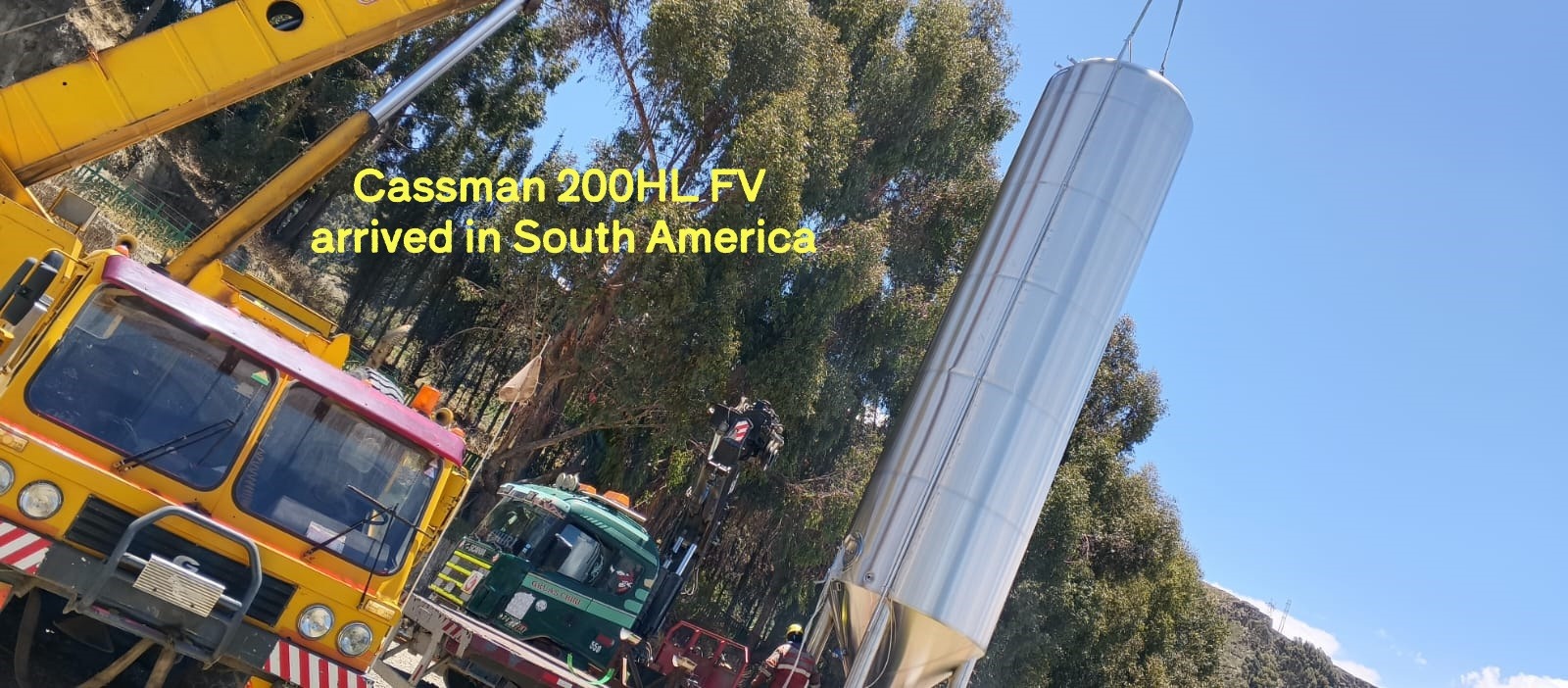
Project Snapshot
Equipment: 200 hL cylindrical-conical fermentation tank (CCT), food-grade SUS304, fully jacketed for glycol cooling, CIP-ready
Destination: Industrial zone in Greater Buenos Aires, near Quilmes
Transit: 35 days door-to-port via sea freight + local drayage
Packaging: Custom steel cradle, marine-grade tie-downs, heat-shrink wrap, corner protectors, VCI anti-corrosion film, and internal desiccants
Documentation: Commercial invoice, packing list, HS codes, material certs, hydrostatic test reports, and fabrication records aligned with CE/ASME-equivalent standards
A Real-World Logistics Timeline — No Shortcuts
This wasn’t just “shipped and delivered.” Every phase was tracked, verified, and engineered for safety:
Factory QA: Before dispatch, the vessel underwent hydrostatic pressure testing, jacket leak checks, surface roughness verification (Ra ≤ 0.8 µm), and dye-penetrant inspection at all critical welds.
Port departure: Mounted on a reinforced steel skid with shock/tilt indicators. All openings sealed; internal components wrapped in VCI film to combat humidity during the long haul.
Ocean transit: 35 days across the Pacific and Atlantic, with route tracking shared weekly. Transshipment updates were sent during key port calls (e.g., Singapore, Santos).
Buenos Aires port: Cleared customs smoothly with the client’s local broker. Seal integrity was photo-verified before devanning.
Final-mile delivery: Transported on a low-bed truck with escort (required for oversized loads). Offloaded using a certified rigging plan—lift points clearly marked on the vessel skirt, as per Cassman’s lifting guidelines.
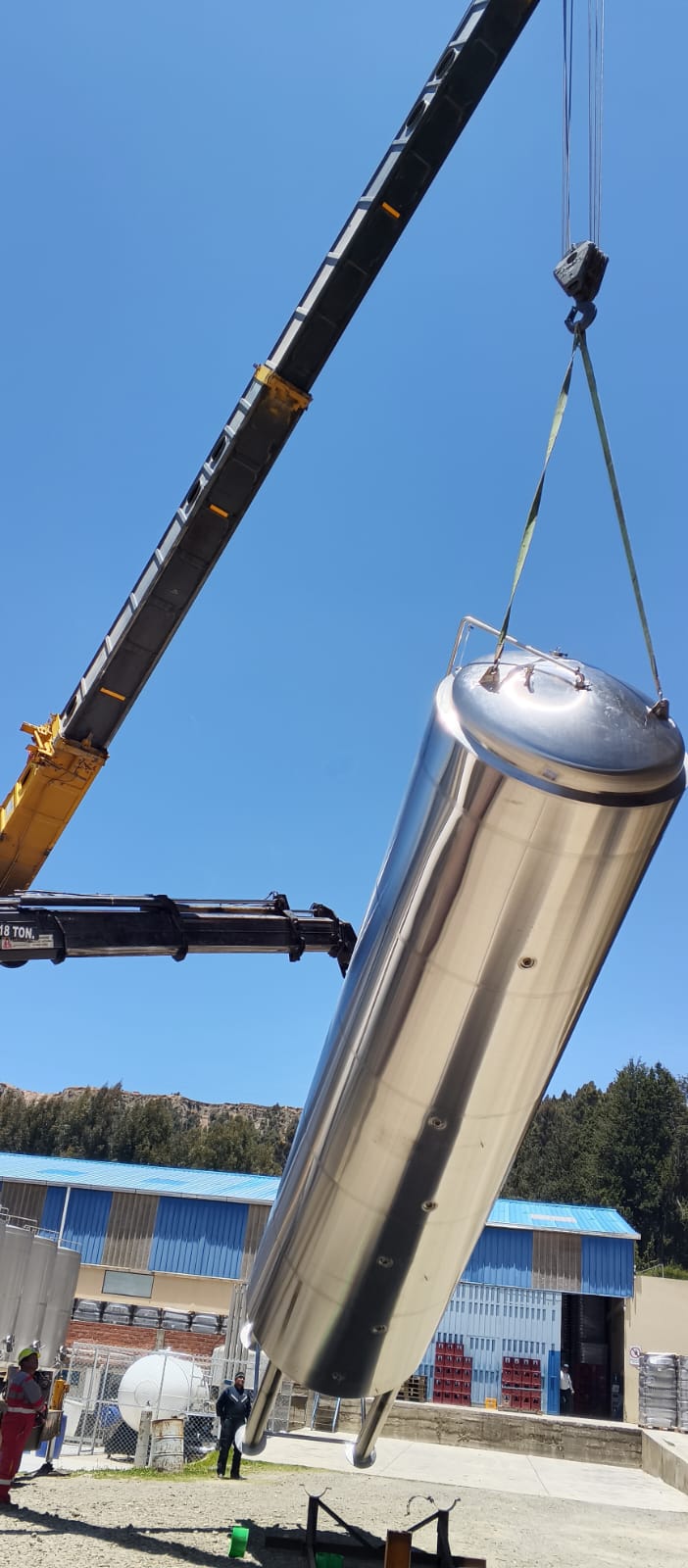
On-Site Receipt: Inspection That Matters
The receiving team didn’t just sign a delivery note—they validated it:
✅ Visual check: No dents, scratches, or deformation. Shock indicators showed no exceedance.
✅ Surface finish: Protective film peeled in sections—SUS304 mirror finish intact, no salt-mist corrosion (a common concern on South American routes).
✅ Fittings accounted for: PRV, sample valves, thermowells, CIP spray ball, and manway gaskets all matched the packing list. Tri-clamp ferrules were capped and labeled.
✅ Quick integrity test: Low-pressure hold on the shell and glycol jacket confirmed no transit-induced leaks.
“Seeing the tank arrive in perfect condition—after 5 weeks at sea—gave us real confidence in the build quality and packaging,” said the client’s operations lead (name withheld per request).
Installation Readiness: Designed for Fast Integration
The vessel wasn’t just shipped—it was engineered to plug in:
Utilities: Glycol supply/return headers already stubbed out at the cellar; anchor bolt locations and insulation clearances surveyed in advance.
Controls: Compatible with the site’s existing glycol chiller system and SCADA architecture. Full I/O map and wiring diagrams provided.
Hygiene: CIP spray coverage validated via 3D design map; all internal welds orbital-finished with zero shadow zones; drain slope ≥ 2% for complete runoff.
Why This 200 hL Fermenter Fits the Site
Batch flexibility: Matches the brewery’s 100–150 hL brewhouse output, allowing 1.5–2 brews per tank per week.
Thermal control: Dual-zone glycol jackets enable rapid crash cooling (down to 0°C in <24 hrs) and stable lagering—critical for Pilsner and Helles styles.
Quality protection: Low dead-space design, sanitary fittings, and minimized oxygen ingress points help maintain low DO (<50 ppb) during transfers.
Next Steps: From Placement to First Fermentation
Leveling & anchoring: Grout pads to be poured after final position alignment.
Utility tie-ins: Glycol, CO₂, CIP, and sensor wiring to follow, then a full pressure/leak test.
Commissioning: Cold water run → CIP validation → first-wort trial. Cassman will provide remote support throughout; on-site technician available if requested.
Privacy, But Not Opacity
We respect our client’s wish to remain unnamed. But we believe transparency builds trust—so we share what can be verified:
Exact arrival zone: Greater Buenos Aires, near Quilmes
Transit duration: 35 days
Inspection protocol used
Standard documentation package
Additional photos of offloading, rigging setup, and inspection checklists are available with the client’s approval.
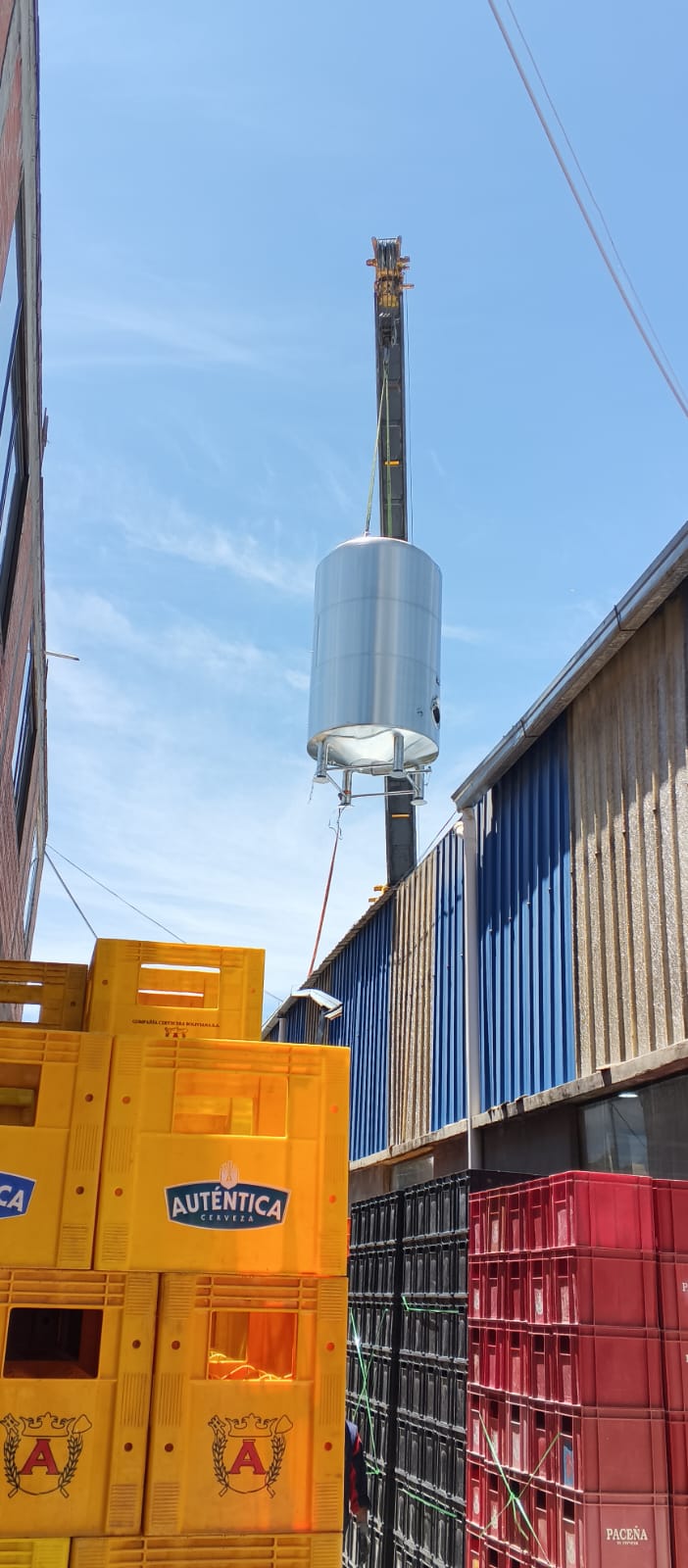
Planning a Fermentation Vessel Shipment to South America?
Cassman has delivered tanks to Buenos Aires, Bahía Blanca, Montevideo, and Santiago. We provide:
Port-specific shipping advice (container vs. breakbulk)
Foundation drawings & utility checklists
Commissioning roadmaps for 100–300 hL fermenters
Explore our solutions:
→ Fermentation & Brite Tanks
→ Glycol Cooling Systems
→ CIP & Sanitary Systems
Contact us:
inquiry@cassmanbrew.com
www.cassmanmachine.com
Cassman — Engineering that travels as well as it brews.


